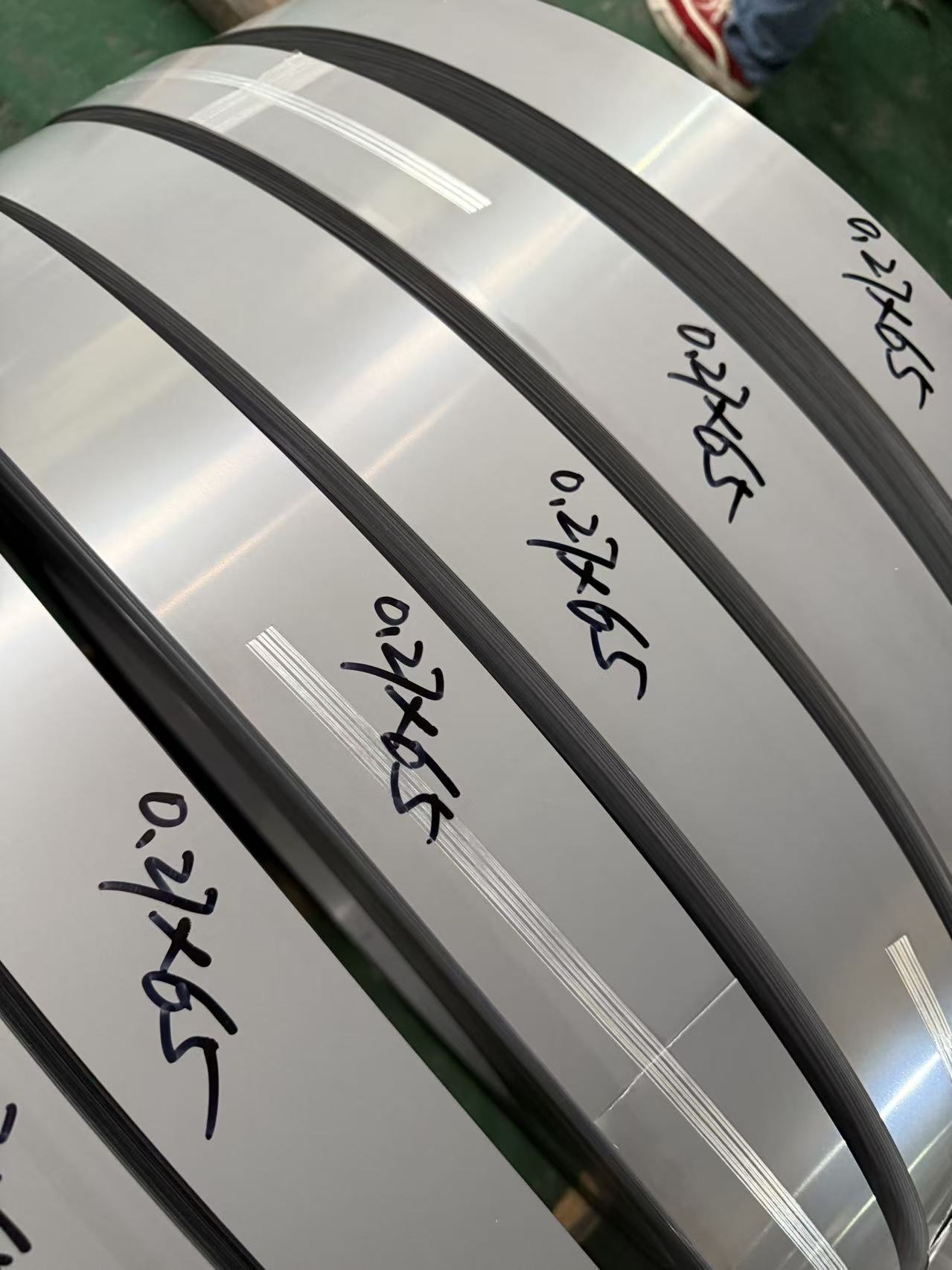
Electric vehicle range depends heavily on battery utilization and the efficiency of the traction motor core. The fundamental engineering conflict in high-speed EV motors involves minimizing high-frequency core losses while maintaining the mechanical yield strength required to withstand extreme centrifugal forces at high RPMs. Powertrain architects and procurement teams face a complex balancing act. You must specify the correct parameters for Electrical Steel to optimize overall motor performance. This technical evaluation guide breaks down how to balance grade selection, lamination thickness, magnetic permeability, and manufacturability to build highly efficient traction motors. We will look at the exact material properties that dictate success on the test bench and the assembly line. By understanding the trade-offs between mechanical integrity and magnetic efficiency, engineering teams can specify the exact laminations needed for their specific motor topology.
Grade Selection Dictates Topology Success: Non-oriented electrical steel remains the standard for traction motors, but specific high-frequency grades are required to manage heat and efficiency at elevated motor speeds.
The Thickness Trade-off: Thinner laminations (e.g., 0.25mm to 0.10mm) exponentially reduce eddy current losses but significantly increase stamping complexity, tool wear, and manufacturing cycle times.
Mechanical vs. Magnetic Compromise: High-speed rotor designs require electrical steel with high yield strength, which traditionally degrades magnetic permeability; evaluating modern dual-phase or specialized high-strength grades is critical.
Topology-Specific Specification: Motor design (e.g., IPMSM vs. Induction vs. Axial Flux) dictates whether the priority is high permeability (torque density) or ultra-low core loss (high RPM efficiency).
Total Cost of Quality: Material selection cannot be isolated from supply chain scalability, coating compatibility, and long-term operational reliability under thermal stress.
Table of Contents
Toggle
How Electrical Steel Improves EV Traction Motor Efficiency
Baseline performance metrics for EV traction motors include torque density, peak efficiency across the drive cycle, and thermal stability. These success criteria depend heavily on the magnetic properties of the stator and rotor cores. Selecting the right material ensures the motor converts electrical energy into mechanical energy with minimal waste. When you evaluate a motor design, the core material acts as the primary conduit for the magnetic flux generated by the copper windings. If this conduit is inefficient, the entire powertrain suffers, drawing more current from the battery to achieve the same wheel torque.
Magnetic Permeability and Torque Density
High magnetic permeability allows a material to support a strong magnetic field with minimal applied current. This property directly translates to higher torque output for a given electrical input. When the core material exhibits high permeability, the motor generates more rotational force. Saturation magnetization also impacts motor size and weight. A material with high saturation limits allows engineers to design smaller, lighter motors without sacrificing power density. This weight reduction directly improves the vehicle's overall efficiency and range. In practical terms, if you specify a grade with a saturation point of 1.6 Tesla instead of 1.8 Tesla, you will likely need to increase the physical size of the stator teeth to carry the required flux, adding dead weight to the vehicle chassis.
Managing Iron Losses (Hysteresis and Eddy Currents)
Total core loss consists of hysteresis loss and eddy current loss. Hysteresis loss depends on the material's grain structure and purity. It occurs because the magnetic domains resist realignment as the alternating current reverses the magnetic field. Eddy current loss depends on the operating frequency and material thickness. High-speed motors induce circulating currents within the laminations, generating unwanted heat. Minimizing total iron loss reduces heat generation. This lowers the requirements for complex cooling systems and preserves battery energy for vehicle propulsion. You can measure these losses in watts per kilogram (W/kg) at specific frequencies, typically evaluated at 400 Hz or higher for modern EV applications.
How to Match Electrical Steel Grades to EV Motor Types
Different rotor and stator configurations require specific material classifications. Comparing the primary material options helps engineers match the steel grade to the motor's operational demands. You cannot apply a one-size-fits-all approach to motor core specification. The physical geometry of the magnetic flux path dictates the required material properties.
Non-Oriented vs. Grain-Oriented Silicon Steel
Non-Oriented Electrical Steel is the default choice for rotating machines. It features isotropic magnetic properties, meaning it conducts magnetic flux equally well in all directions. This is essential for the rotating magnetic fields in standard radial-flux traction motors. Grain-Oriented materials offer superior permeability in one specific rolling direction. While useful in transformers, they are generally unsuitable for standard EV motors. Some experimental topologies, like specific segmented stator designs, attempt to utilize grain-oriented materials, but manufacturing complexities limit their widespread adoption.
Material Type
Magnetic Properties
Primary EV Application
Manufacturing Complexity
Non-Oriented (NOES)
Isotropic (equal in all directions)
Standard Radial Flux Stators/Rotors
Standard stamping and stacking
Grain-Oriented (GOES)
Anisotropic (highly directional)
Segmented Stators (Niche)
High; requires precise alignment during assembly
Mapping Steel Selection to Motor Topologies
The specific architecture of the motor dictates the stress points and magnetic bottlenecks within the core. You must align the material grade with these topological demands.
Interior Permanent Magnet Synchronous Motors (IPMSM): These motors require a balance between high mechanical stress on rotor bridges and high-permeability stator cores. The rotor material must secure the magnets against centrifugal forces at high speeds, often requiring yield strengths exceeding 450 MPa.
Induction Motors (IM): These designs prioritize low stator core loss at high frequencies and high saturation polarization to maintain efficiency across varying loads. The rotor bars also require careful material matching to optimize the induction process.
Axial Flux Motors: These motors demand unique material processing. The axial magnetic paths often require specialized winding or stamping techniques to maintain magnetic integrity, sometimes utilizing spirally wound cores instead of stacked flat laminations.
High-Frequency vs. High-Torque Grade Specifications
Standard grades differ significantly from specialized automotive grades optimized for 400Hz to 1000+Hz operations. High-frequency grades prioritize thinness and specific alloying elements to reduce losses. Silicon, aluminum, and manganese are added to increase electrical resistivity. Silicon levels can reach up to 3.5%, and some high-silicon alloys push toward 6.5%. While these additions reduce eddy currents, they increase material brittleness. This brittleness complicates the stamping process and requires specialized tooling to prevent edge cracking during production. You will often see a direct trade-off: as you increase silicon content to drop high-frequency losses, your stamping die maintenance intervals will shorten drastically.
How Lamination Thickness Affects EV Motor Core Loss and Production
The physical dimensions of the steel directly impact both motor performance and production viability. Engineers must evaluate the trade-offs between magnetic efficiency and manufacturing complexity. Thinning the material is the most direct way to combat eddy currents, but it introduces severe challenges on the factory floor.
Standard vs. Ultra-Thin Laminations
Industry-standard thicknesses typically range from 0.35mm to 0.30mm. Ultra-thin alternatives push these limits down to 0.25mm, 0.20mm, and even 0.10mm. As thickness decreases, eddy current losses drop exponentially. This reduction becomes critical at the high operating frequencies common in modern EV motors. A 0.20mm lamination stack will exhibit significantly lower heat generation at 10,000 RPM compared to a 0.35mm stack, improving sustained high-speed efficiency. However, the space factor (the ratio of actual steel to the total volume of the stack) decreases with thinner laminations due to the relative thickness of the insulation coating, which can slightly reduce overall torque density.
Manufacturing Scalability and Cost Trade-offs
Ultra-thin electrical steel introduces severe production realities. Thinner sheets require a higher number of laminations per stack to achieve the same motor length. This slows down stamping speeds and demands tighter manufacturing tolerances. Tool wear accelerates rapidly when punching high-silicon, ultra-thin grades. Furthermore, traditional interlocking methods may deform thin sheets.
Evaluate the stamping press tonnage and speed capabilities; ultra-thin materials often require high-speed presses with extreme precision to avoid burr formation.
Assess the joining method. Manufacturers often shift to advanced joining techniques like laser welding or adhesive bonding varnishes (e.g., Backlack).
Calculate the curing time for bonding varnishes, as this adds a thermal baking step to the production line, increasing the overall cycle time per stator.
These methods prevent short circuits and maintain core rigidity without introducing localized mechanical stress.
Balancing Magnetic and Mechanical Performance in High-Speed EV Motors
Modern high-speed EV motors often exceed 15,000 to 20,000 RPM. These extreme speeds introduce severe mechanical demands that conflict with optimal magnetic performance. The rotor, in particular, becomes a highly stressed mechanical component that must simultaneously act as an efficient magnetic circuit.
Yield Strength Requirements for High-RPM Rotor Bridges
Centrifugal stresses place immense loads on rotor bridges and retaining structures in IPMSMs. The steel must prevent the permanent magnets from breaking through the rotor surface. Traditional methods to increase yield strength, such as solid solution strengthening and grain refinement, inherently degrade magnetic permeability. They also increase hysteresis loss. Engineers must evaluate modern high-strength grades developed specifically to optimize this boundary, providing enough mechanical integrity without ruining the motor's magnetic efficiency. Some manufacturers now offer dual-phase materials where the rotor bridges are locally hardened via laser heat treatment, leaving the rest of the lamination magnetically soft.
Magnetic Degradation Under Mechanical Stress
The stress-anisotropy effect alters magnetic behavior. Tensile and compressive stresses introduced during assembly, such as shrink-fitting the stator into the housing, degrade the magnetic properties of the core material. High-speed operation also induces dynamic stresses. These mechanical forces distort the magnetic domains, requiring more current to achieve the same torque output. Motor designers must account for this degradation during the simulation phase to ensure real-world performance matches theoretical models. If you simulate a motor using unstressed material data, your prototype will likely underperform in both peak torque and continuous thermal ratings.
Thermal Management and Operational Reliability
Material degradation occurs under continuous thermal cycling. High operating temperatures can break down insulation coatings and alter the steel's microstructure over time. The steel's thermal conductivity plays a vital role in dissipating heat away from the stator windings. Efficient heat transfer prevents localized hot spots that can damage the winding insulation and lead to catastrophic motor failure. Selecting a grade with adequate thermal properties ensures long-term operational reliability. You must verify that the chosen insulation coating can withstand continuous operation at 180°C to 200°C without flaking or losing its dielectric strength.
EV Motor Electrical Steel: Grades, Coatings, and Sourcing
Specifying advanced materials involves commercial and operational risks. Buyers must navigate proprietary grading systems and secure reliable supply chains. The global market for these specialized alloys is tight, and lead times can dictate project schedules.
Understanding Commercial Grade Paradigms
The market classification systems for automotive electrical steel vary by manufacturer. You must compare "High-Permeability" grades designed for peak torque against "Low-Loss" grades engineered for high-speed cruise efficiency. Global steelmakers offer proprietary product lines targeting specific performance profiles.
Grade Category
Primary Characteristic
Best Use Case
Manufacturing Impact
High-Permeability
High saturation magnetization
High torque density, stop-and-go driving
Standard stamping and interlocking
Low-Loss (High-Frequency)
High resistivity, thin gauge
High RPM efficiency, highway cruising
Requires advanced bonding, high tool wear
High-Strength
High mechanical yield strength
IPMSM rotors at extreme RPMs
Harder material, slower punch speeds
Coating Selection for Insulation and Tool Wear Mitigation
Standard insulation coatings offer varying levels of thermal resistance, punchability, and interlaminar resistance. The coating prevents eddy currents from jumping between laminations. The wrong coating can lead to premature tool degradation during the stamping process. It can also cause interlaminar shorting under high-compression stacking. You must select a coating that withstands the motor's peak operating temperatures while acting as a lubricant for the stamping dies. C-5 coatings are common for their temperature resistance, while C-6 coatings offer organic additions to improve punchability at the cost of some high-temperature stability.
Supply Chain Scalability for Specialized EV Grades
Global capacity constraints exist for high-grade, ultra-thin non-oriented electrical steel. As EV production scales, securing reliable volumes of specialized grades becomes challenging. Mitigation strategies include dual-sourcing materials and standardizing thickness across different motor platforms where possible. Engaging in early supplier involvement during the motor design phase ensures the specified material can be produced in the required volumes. Do not design a motor around a 0.15mm experimental grade without written volume commitments from the steel mill.
Conclusion
Define the primary operating profile of the vehicle to determine whether high torque or high-speed efficiency is the priority before selecting a material grade.
Select a lamination thickness that balances acceptable eddy current losses with your facility's stamping and stacking capabilities.
Specify high-strength grades for IPMSM rotors only where centrifugal forces strictly require it, to avoid unnecessary magnetic degradation.
Partner with suppliers early in the design phase to verify the scalability and coating compatibility of your chosen material.
With more than 20 years of experience in the electrical steel market and over 16 years in manufacturing, SHERAXIN supplies CRGO electrical steel and CRNGO products with customized production capabilities for customers worldwide. Supported by established production, testing, and supply-chain resources, the company helps buyers evaluate material performance, processing compatibility, scalability, and delivery requirements more efficiently.
FAQ
Q: What is the main difference between non-oriented and grain-oriented electrical steel?
A: Non-oriented steel conducts magnetic flux equally well in all directions, making it ideal for the rotating magnetic fields in EV motors. Grain-oriented steel is optimized for magnetic flow in one specific direction, which is primarily used in static applications like transformers.
Q: Why do high-speed EV motors require thinner steel laminations?
A: Thinner laminations restrict the path of circulating eddy currents induced by high-frequency magnetic fields. This drastically reduces heat generation and energy loss, improving the motor's efficiency at high RPMs.
Q: How does increasing the yield strength of the steel affect motor performance?
A: Methods used to increase mechanical yield strength typically disrupt the material's magnetic domain structure. This lowers magnetic permeability and increases hysteresis loss, meaning the motor requires more energy to produce the same amount of torque.
Q: What is the purpose of the insulation coating on electrical steel?
A: The coating provides electrical resistance between individual laminations in the core stack. This prevents eddy currents from flowing across the entire core, which would otherwise cause massive energy losses and dangerous heat buildup.
Q: Why is stamping ultra-thin electrical steel difficult?
A: Ultra-thin grades often contain high silicon levels, making them brittle. This brittleness causes rapid wear on stamping dies. Additionally, thinner sheets are harder to interlock mechanically without causing deformation, often requiring slower laser welding or adhesive bonding processes.