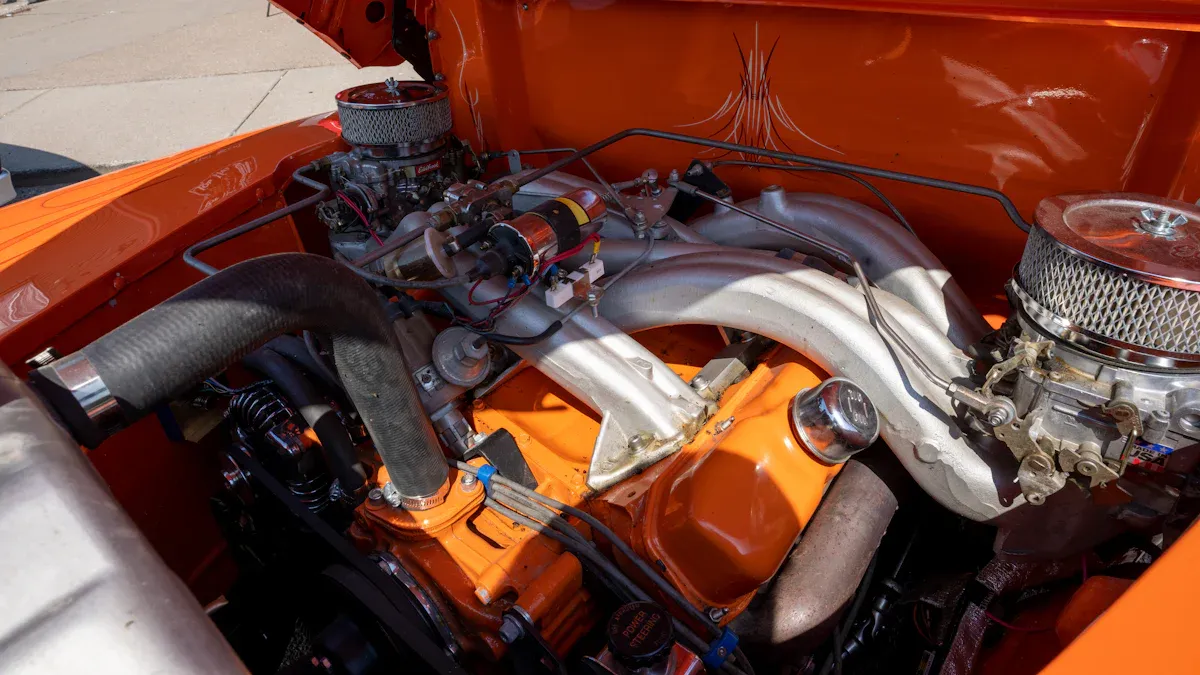
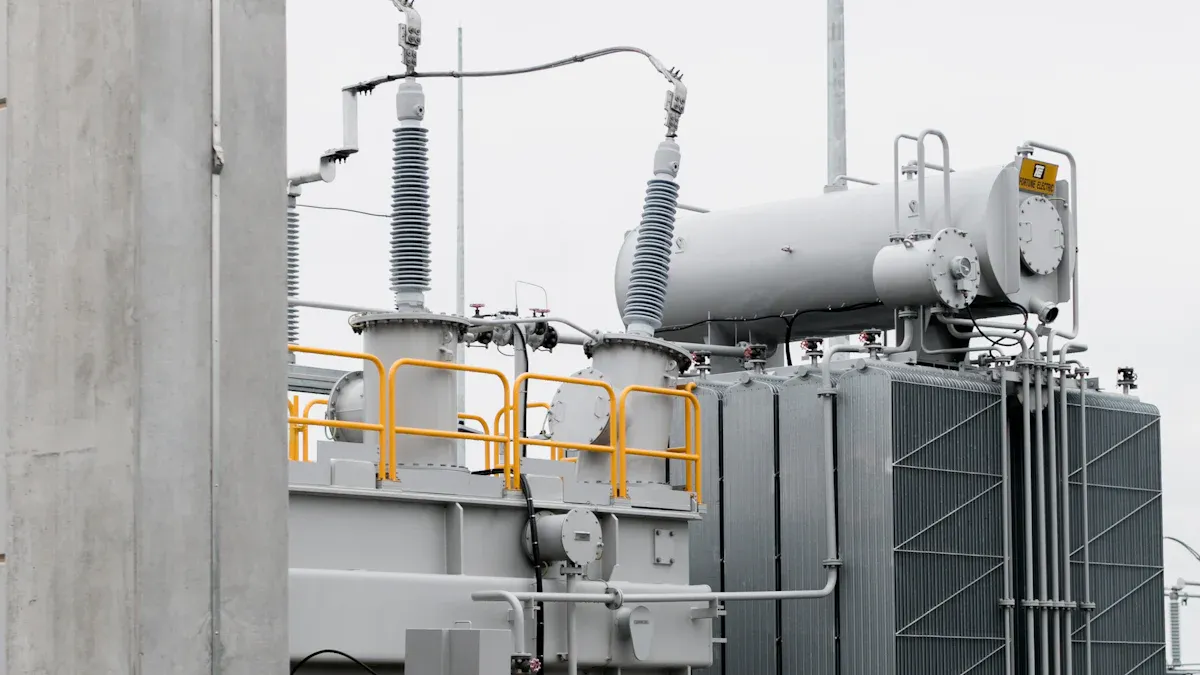
You use electrical silicon steel when you use a motor or transformer. This material is inside these devices. It helps them work better and saves energy. Electrical silicon steel is special. It has strong magnetic properties and loses little electricity. If you look at other core materials, you see why electrical silicon steel is better.
Material Type | Efficiency | Core Loss | Application Suitability |
Electrical Silicon Steel | High | Low | Cost-effective for low-frequency applications |
Ferrite | Moderate | Low at high frequencies | Best for high-frequency applications |
Nickel and Cobalt Alloys | Lower | Higher | Not widely used in transformers and motors |
Amorphous and Nanocrystalline Alloys | Higher | Low | Superior for high-frequency and high-power applications, but less cost-effective for low-power applications |
Using electrical silicon steel in your machines helps them work better. It saves energy too. Electrical silicon steel helps motors and transformers stay cool. They last longer because of this. You can see they are more reliable and cost less to run. Electrical silicon steel gives these good results. It has the right magnetic and electrical features.
Key Takeaways
Electrical silicon steel helps motors and transformers work better. It lowers energy loss and makes less heat.
Thin laminations in cores help stop eddy currents. This makes machines work better and last longer.
Grain-oriented silicon steel works best for transformers. Non-grain-oriented steel is better for motors. These choices improve magnetic properties.
More people want energy-saving equipment now. This makes the market for electrical silicon steel grow. It may reach $45 billion by 2032.
Recycling electrical silicon steel helps the planet. It cuts down on waste and saves resources.
Electrical Silicon Steel Overview
Composition and Properties
Electrical steel is found in most motor and transformer cores. It has different elements that help it work well. Iron is the main part. Iron makes the steel strong. It also helps the core pull and guide magnetic fields. Silicon is added to make the steel resist electricity better. Silicon also helps stop energy from being wasted. Carbon is kept low. This keeps the steel tough but not brittle. Sometimes, makers add manganese, aluminum, or phosphorus. These extras help the steel work even better.
Here is a table that shows what each element does:
Element | Effect on Magnetic Properties |
Iron (Fe) | Gives strength and helps with magnetism. |
Silicon (Si) | Makes steel resist electricity and saves energy. |
Carbon (C) | Keeps steel strong, used in small amounts. |
Other Alloying Elements | Help the steel work better, like manganese, aluminum, phosphorus. |
There are two main types of electrical steel. Grain-oriented silicon steel has grains that go in one direction. This makes it great for transformer cores. Non-grain-oriented steel has grains that go in all directions. It works well in motors and generators. These need magnetic properties everywhere.
Role in Efficiency Improvement
Electrical steel helps motors and transformers work better. Its magnetic properties guide magnetic flux with little loss. Less energy turns into heat. Devices stay cooler and last longer. Electrical steel cuts down core losses. This saves energy and boosts performance.
Electrical steel is used in low and moderate frequency machines. Power transformers, inductors, and electric motors use it. It handles magnetic fields well. Grain-oriented silicon steel is best for transformer cores. Non-grain-oriented steel is good for motors and generators.
Reports say grain-oriented silicon steel will lead the transformer market. It will make up over 40% of revenue by 2025. This is because people want better power transmission. In motors, electrical steel makes them more efficient. It also helps them stay cool for long use.
The need for electrical steel is growing worldwide. The market was worth $30 billion in 2023. It may reach $45 billion by 2032. This is because people want energy-saving equipment. New technology in electronics and cars also helps the market grow.
Electrical steel follows strict global rules. These rules make sure it has high magnetic permeability. They also keep core losses low and make it work well. You depend on electrical steel to make devices last longer and use less energy.
Motor Applications
Motor Core Design
Electrical silicon steel is found inside every strong motor. The core is very important for how the motor works. Engineers focus on the core’s design because it affects how well the motor runs. It also affects how much energy is lost. The core is made of thin sheets called laminations. These laminations help stop energy from being wasted. They also help keep the motor cool.
Here is a table that shows the main design considerations for a motor core using electrical silicon steel:
Design Consideration | Description |
Core Thickness | Thinner laminations reduce eddy current losses but may increase manufacturing complexity and cost. |
Grain Orientation | Grain-oriented silicon steel enhances magnetic flux flow along the rolling direction, improving efficiency. |
Insulating Coatings | Proper coatings prevent electrical shorts between layers, maintaining high resistivity and lowering losses. |
Thermal Management | Incorporating cooling strategies is essential to maintain optimal core temperature. |
Mechanical Stability | Ensuring tight stacking and secure assembly reduces vibration and noise, improving durability. |
Thinner laminations, usually between 0.2mm and 0.65mm, help save energy. The way the grains are lined up in the steel matters too. Grain-oriented steel lets magnetic flux move easily in one direction. This helps the motor work better. Non-grain-oriented steel is used more in motors. This is because the magnetic field changes direction as the motor spins.
Laminations that are annealed after stamping have a big advantage. They reach the highest permeability. This means less power is needed for AC uses.
Electrical silicon steel gives the core high magnetic permeability. This means the core can carry more magnetic flux. This makes the motor work better and use less energy. Special coatings on each lamination stop electricity from leaking. This keeps the core safe and efficient.
Impact on Motor Efficiency
Electrical silicon steel helps your motor work better. You want your motor to use less energy and last longer. The right core material helps you do this. Using electrical silicon steel gives you many benefits:
The core loses less energy as heat, so efficiency is higher.
The motor stays cooler, so it lasts longer and needs less fixing.
You spend less money on electricity because the motor uses less power.
The motor can be smaller and lighter, but still strong.
You help the environment by using less energy and making less waste heat.
Electrical silicon steel is used in many kinds of motors. These include induction motors, synchronous motors, and brushless DC motors. Each type uses the steel to work better and lose less energy. Non-grain-oriented silicon steel is used most often in motors. It works well because the magnetic field changes direction as the motor turns.
Silicon steel cores make magnetic properties better, so motors work better.
High magnetic permeability helps magnetic flux move easily, so less energy is lost.
This means electrical energy turns into mechanical power more efficiently.
Adding silicon to the steel makes it resist electricity better and lose less energy. This makes your motor work better and last longer. The motor can give more power without getting too hot or wasting energy.
When you use electrical silicon steel, you see a big difference in how well your motor works. The steel cuts down on core losses, so you save energy in big motors. You also pay less to run the motor because it uses less electricity. The better performance lets you make smaller, lighter motors that are still strong. You help the planet by using less energy and making less waste heat.
Transformer Applications
Transformer Core Function
The transformer core is like the heart of a transformer. It helps move magnetic flux between the main windings. Electrical silicon steel makes the core work better. You want high magnetic permeability in your transformer. This helps the core carry magnetic flux with less wasted energy. That means less core loss and better efficiency.
Electrical silicon steel keeps core losses low. The steel fights against eddy current losses and hysteresis losses. Less energy is lost as heat. The core uses thin silicon steel laminations. These laminations break up the path for eddy currents. This lowers eddy currents and core loss. The transformer core stays cool and lasts longer.
Grain-oriented silicon steel is often used in transformer cores. This type gives the best efficiency. The grains all point in one direction. Magnetic flux moves easily along this path. You lose less energy and can use smaller cores. The transformer core can be lighter and smaller.
Electrical silicon steel helps control magnetic flux in the core. Here are some benefits:
High magnetic permeability lets the core move magnetic flux well.
Low core loss means less energy is wasted.
Grain-oriented silicon steel makes permeability better and cuts core loss.
You get smaller, lighter cores with better efficiency.
There are different types of transformer cores in machines. Each type uses electrical silicon steel to work better. Here is a table that shows common transformer core types:
Core Type | Description | Efficiency Impact |
Shell-type | Core goes around the windings, making a closed path for magnetic flux. | Usually has less energy loss. |
Core-type | Windings go around the core steel, not a closed loop for magnetic flux. | Usually has more energy loss. |
Three Limb Core | Used for dry-type and big oil-filled transformers. | Used in low and medium voltage. |
Four Limb Core | Not used as much, for special jobs. | Depends on the design. |
Five Limb Core | Used in special transformer designs. | Depends on the design. |
Shell-type transformer cores usually lose less energy. The closed path helps control magnetic flux. This gives better efficiency and lower core loss.
Efficiency in Energy Transfer
You want your transformer to move energy with little loss. Electrical silicon steel helps make this happen. The core uses high magnetic permeability to guide magnetic flux. This means energy moves well and less power is wasted.
The transformer core has two main losses: eddy current losses and hysteresis losses. Electrical silicon steel lowers both. Thin laminations break up eddy currents. This lowers eddy currents and core loss. The steel’s makeup also cuts down hysteresis losses. Less energy is lost each time the cycle repeats.
Here is a table that shows how high magnetic permeability helps transformers:
Property | Benefit in Transformers |
High Permeability | Moves magnetic flux well |
High magnetic permeability lets the core carry magnetic flux with less energy. You waste less power and get better efficiency. The core stays cool and lasts longer.
Electrical silicon steel keeps core losses low. Less energy is lost as heat. The core works better and uses less electricity. You get machines that work well and cost less to run.
Tip: Pick transformer steel with high magnetic permeability and low core losses. This saves energy and lowers costs.
Transformer efficiency depends on the core. Electrical silicon steel gives the best results. You get lower eddy currents, less core loss, and better energy transfer. The core works well in all machines. You get good performance and long life.
Processing Electrical Steel
Manufacturing Methods
Making silicon steel laminations takes many steps. Each step changes how the steel works. The first step is steelmaking and slab preparation. This makes sure the steel is pure. Pure steel gives better magnetic properties. Next is hot rolling and pickling. These steps help the steel’s structure stay even. Uniform steel is strong and works well.
Cold rolling shapes the steel’s thickness and performance. The texture forms during recrystallization. Decarburization annealing makes Goss nuclei. These nuclei are important for the grain structure. Secondary recrystallization and annealing help the Goss orientation grow. This boosts magnetic properties.
Manufacturing Method | Influence on Properties |
Steelmaking and Slab Preparation | Purity of chemical composition is crucial for optimal magnetic properties. |
Hot Rolling and Pickling | Achieves microstructure homogeneity, impacting deformation uniformity. |
Cold Rolling Technology | Determines final thickness and performance, focusing on recrystallization texture. |
Decarburization Annealing | Forms Goss nuclei, crucial for achieving desired grain structure. |
Secondary Recrystallization and Annealing | Selectively grows Goss orientation nuclei, significantly enhancing magnetic properties. |
Special rolling methods and rapid solidification make high silicon steel laminations. Adding manganese and aluminum makes the steel stronger. New processes help the environment. Automation and real-time data analytics help control quality and save energy. These steps make silicon steel laminations better for the planet.
Laminations and Assembly
Silicon steel laminations build the core of motors and transformers. You cut laminations into exact shapes. You stack them tightly to make a laminated core. This core helps reduce energy loss. Thinner laminations limit the path for eddy currents. This means less energy loss and better efficiency. Thicker laminations give more support but increase losses.
The link between lamination thickness and eddy current loss is quadratic. If you double the thickness, losses go up eight times. Thin laminations, between 0.2mm and 0.3mm, are best for high-efficiency motors and transformers. You assemble laminations with tight tolerances. This is important for good performance.
You use silicon steel laminations in many laminated cores. You see them in motors, transformers, and electric vehicles. Laminations keep devices cool and efficient. You get better magnetic performance and longer life for machines. Using sustainable methods helps the environment.
Tip: Always pick thin silicon steel laminations for high-efficiency uses. You will see less energy loss and better results.
Silicon steel laminations are key for strong laminated cores. You get the best results with advanced manufacturing and assembly methods.
Performance and Efficiency Benefits
Energy Savings
You want your machines to use less energy. Electrical silicon steel helps you do this. When you use it in a transformer or motor, less energy turns into heat. The steel’s high magnetic flux density lets your transformer handle big loads. It does not waste much power. You get more work from the same electricity.
Amorphous cores can lower no-load losses by 70-80%. These are good for special jobs that need to save energy.
Silicon steel is best for high-load work. It gives strong performance and saves energy.
You must think about cost, efficiency, and what your machine needs. Sometimes silicon steel is the right choice for your transformer.
Tip: Picking the right core material saves money on energy bills. It also helps your transformer work well.
Durability and Reliability
You want your transformer and motor to last long. Electrical silicon steel helps make this happen. It boosts energy efficiency and lowers core losses. This matters when your transformer works hard every day.
Electrical silicon steel cuts down energy lost to eddy currents. This keeps your transformer cool and safe.
The steel’s high magnetic permeability lets magnetic fields move easily. Your transformer works better and stays reliable.
Less energy loss means less heat. Your equipment lasts longer and needs fewer repairs.
You get less heat, so transformer parts do not wear out fast.
Your machines work better and give steady performance.
You enjoy a longer life for your transformer because it loses less energy.
Note: Using electrical silicon steel in your transformer gives you a strong, reliable machine. It saves energy and lasts for years.
You can find electrical silicon steel in motors and transformers. It has strong magnetic properties that help save energy and money. Many industries use it, like electric vehicles, renewable energy, and data centers. The table below shows how different industries use silicon steel and what they gain:
Industry/Application | Key Findings |
Siemens' High-Efficiency Transformers | Lower energy losses, reduced costs, better energy conservation. |
Electric Vehicle Motors | Improved efficiency, longer range, less environmental impact. |
Renewable Energy Solutions | Higher energy conversion, lower maintenance costs. |
Data Centers and Power Distribution | Reliable, efficient power for IT systems. |
Industrial Automation | Cost savings, better productivity. |
Silicon steel will keep being important as technology changes and energy needs grow.
FAQ
What is electrical silicon steel?
Electrical silicon steel is a kind of steel. It is used in motor and transformer cores. It has iron and silicon mixed together. This mix helps machines save energy. It also helps them work better.
Why do you need laminations in motor and transformer cores?
Laminations help lower energy loss. Thin sheets stop eddy currents from happening. This keeps machines cool. It also makes them more efficient.
Tip: Pick thin laminations for the best results.
How does silicon help improve efficiency?
Silicon makes steel resist electricity more. This means less energy turns into heat. Motors and transformers stay cooler. They last longer too.
Benefit | Result |
Less heat | Longer life |
More savings | Lower bills |
Can you recycle electrical silicon steel?
You can recycle electrical silicon steel. This helps the planet and saves resources. Many companies reuse steel from old motors and transformers.