

close
Choose Your Site
Global
Social Media
Views: 0 Author: Site Editor Publish Time: 2025-11-22 Origin: Site


Electrical steel is one of the most important—and least understood—materials powering modern civilization. It sits at the heart of electric motors, power transformers, generators, inverters, EV drivetrains, household appliances, renewable energy systems, and the global electrical grid. Without electrical steel, the world could not efficiently generate, convert, or consume electricity.
Yet despite its importance, many engineers, procurement managers, and even manufacturers only have a partial understanding of what electrical steel really is, how it works, and how different types (GO, NGO, CRGO, CRNGO, high-silicon, amorphous) compare.
This article is a complete, in-depth, covering everything you need to know—including definitions, material science, types, properties, applications, benefits, limitations, and manufacturing methods. If your goal is to understand electrical steel at both a practical and technical level, this is your ultimate reference.
Electrical steel—also called silicon steel, lamination steel, transformer steel, or relay steel—is a specially engineered iron–silicon alloy designed to exhibit superior magnetic and electrical properties under alternating magnetic fields. Unlike ordinary carbon steel, the main purpose of electrical steel is not structural; it is to reduce magnetic losses and maximize efficiency in electromagnetic devices.
According to the reference material, electrical steel typically contains up to 6.5% silicon, although most commercial grades limit this to around 3.2–3.5% to avoid brittleness during rolling.
Low core loss (reduced hysteresis + reduced eddy currents)
High magnetic permeability
High electrical resistivity (thanks to silicon content)
Soft magnetic behavior (easy to magnetize and demagnetize)
Thin, insulated laminations to reduce eddy currents
Consistent grain structure for predictable magnetic behavior
These properties make electrical steel indispensable for AC magnetic applications such as motors and transformers.
Electrical steel matters because every time an AC magnetic field changes direction—which happens 50–60 times per second in most power systems—energy is lost. These losses appear as heat inside the steel core, reducing efficiency and shortening equipment lifespan.
Electrical steel minimizes this energy waste, enabling:
Higher efficiency motors (critical for EVs and industrial machinery)
Lower-loss transformers (supporting the modern power grid)
Reduced heat generation
Smaller, lighter magnetic components
Greater energy savings across society
In an age of electrification, renewable energy, and electric mobility, electrical steel is a foundation material for the global energy transition.
Electrical steel comes in two main families—grain-oriented and non-grain-oriented—with two important industry terms associated with them: CRGO and CRNGO.
Let’s break them down.
Grain-oriented electrical steel is engineered so that its crystal grains are aligned in the rolling direction. This results in:
Exceptionally high permeability in one direction
Extremely low core loss
Optimized performance for transformers
GO is mainly used where magnetization stays in a constant direction—such as transformer cores. Because transformers operate continuously, even small efficiency gains can save large amounts of energy annually.
Non-grain-oriented steel has random crystal orientation, giving it:
Isotropic magnetic properties (same in all directions)
Great performance in rotating machines
Flexibility for high-speed or multi-directional magnetic fields
NGO is preferred for:
Electric motors
Generators
Appliances (fans, compressors, pumps)
EV drivetrains
These terms represent the commercial and manufacturing classifications of GO and NGO.
CRGO is the premium form of grain-oriented steel, made through precise cold rolling and secondary recrystallization. It features:
Extremely low core loss
Magnetic flux optimized in the rolling direction
High-efficiency transformer performance
Typical silicon content around 3%
CRGO is the global standard for power and distribution transformer cores. Utilities, grid operators, and transformer manufacturers rely on it for top-level efficiency.
CRNGO is the cold-rolled version of NGO steel. Important characteristics:
Magnetic properties nearly equal in all directions
Ideal for rotating equipment
More affordable and easier to fabricate
Used widely in motors, generators, EVs, compressors, pumps
CRNGO is produced in very large volumes because every electric motor—from your refrigerator to your electric vehicle—depends on it.
| Property | CRGO | GO | CRNGO | NGO |
|---|---|---|---|---|
| Grain orientation | Aligned | Aligned | Random | Random |
| Magnetic directionality | Highly directional | Directional | Isotropic | Isotropic |
| Best for | Transformers | Transformers | Motors / Generators | Motors / Generators |
| Core losses | Lowest | Very low | Moderate | Moderate |
| Cost | Higher | Higher | Lower | Lower |
Manufacturing electrical steel is significantly more complex than producing ordinary steel. Precision is crucial because magnetic behavior depends on exact composition, grain structure, and mechanical treatment.
Here is the full process:
Iron ore or scrap is melted in an electric arc furnace.
Silicon is added to increase resistivity and lower core losses.
Alloy adjustments remove carbon, sulfur, manganese, and oxygen impurities.
The steel is rolled into thick strips, preparing the internal structure for:
Better magnetic properties
Subsequent cold reduction
Desired thickness targets
This step defines the exact thickness, which for electrical steel ranges from 0.18–0.35 mm depending on grade.
Cold rolling improves:
Mechanical strength
Surface finish
Magnetic consistency
Annealing restores magnetic softness by:
Recrystallizing the grain structure
Reducing internal stresses
Aligning grains (for GO / CRGO)
During annealing, the signature grain orientation of GOES develops.
Electrical steel sheets receive coatings to:
Provide insulation between laminations
Reduce inter-laminar eddy currents
Improve corrosion resistance
Improve punching and stacking performance
Final laminations are produced with:
Laser cutting
Punching
Shearing
Precision slitting
Electrical steel is then stacked to form:
Motor stator cores
Transformer cores
Generator rotors
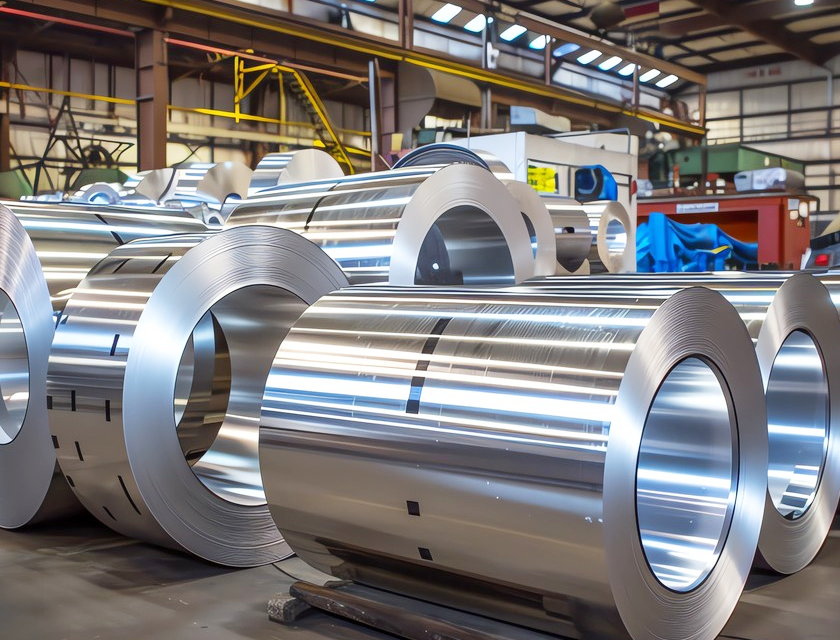
Coils may also be shipped to secondary processors for further slitting and stamping.
Electrical steel’s performance is defined by its magnetic, electrical, and mechanical properties.
Here are the most important characteristics, all drawn from the uploaded reference.
High permeability
Low hysteresis loss
Minimal magnetostriction (reduces noise)
Directional permeability (GO / CRGO)
These properties enable smooth and efficient magnetic flux flow through the steel.
High resistivity (~45–50 microhm-cm)
Resistivity increases with silicon content
Higher resistivity = fewer eddy currents = less heat
Tensile strength ranges: 361–405 MPa
Rockwell hardness typically around 85
Thickness varies from 0.18 mm to 0.35 mm
Density decreases slightly with silicon content
Curie temperature: 730–750°C
Stable under typical motor/transformer temperature rise
Low thermal expansion
Electrical steel is used across nearly all sectors of industry and technology.
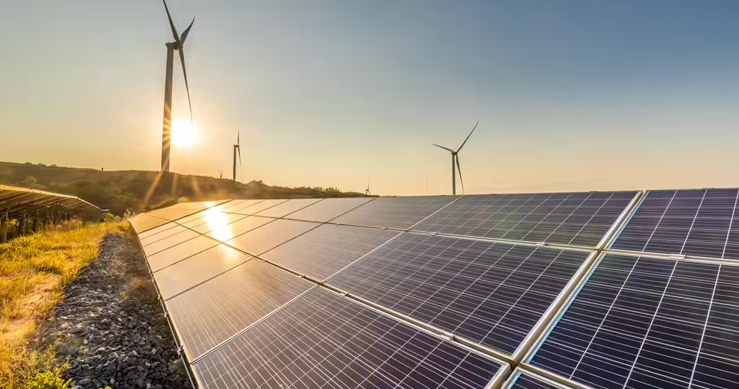
Power transformers (CRGO)
Distribution transformers (CRGO)
Large generators
Renewable energy (wind turbines, hydro)
Smart grid equipment
Because transformers run 24/7, even 1% efficiency improvements save millions of dollars annually.
Traction motors (CRNGO / NGO)
Onboard chargers
DC–DC converters
Inverters
Charging infrastructure transformers (GO)
As EV adoption grows, high-grade CRNGO demand is skyrocketing.
Industrial motors of all sizes
Pumps and compressors
Robotics and automation systems
CNC machines
Fans and blowers
Nearly every industrial plant depends on electrical steel.
Washing machines
Refrigerators
Air conditioners
Hair dryers
Vacuum cleaners
HVAC equipment
Motors in household appliances rely heavily on CRNGO steel laminations.
Relays
Solenoids
Inductors
Magnetic switches
Ballasts
Electrical steel is essential for precise electromagnetic control.
Electrical steel delivers major benefits in efficiency and performance:
Lower hysteresis
Lower eddy currents
Lower heat generation
Motors and transformers deliver more power with less electricity.
Higher magnetic performance means fewer laminations are needed.
Lower operating temperatures extend equipment lifespan.
Energy savings compound over years of 24/7 operation.
Despite its benefits, electrical steel has limitations:
More expensive than carbon steel
Brittle at high silicon content
Requires protective coatings
Not useful for structural applications
Cutting must be precise to prevent magnetic degradation
High-end CRGO production is complex and expensive
Still, the performance benefits dramatically outweigh the drawbacks in most applications.
Electrical steel sits at the heart of motors and transformers. It shapes how efficiently these machines move magnetic energy. When magnetic fields flip back and forth hundreds of times every second, the steel inside determines how much power is saved—or wasted. It matters more than most people realize.
Motors rely on constantly rotating magnetic fields. That’s why they use non-grain-oriented electrical steel (NGO / CRNGO). Its grains point in many directions, so the magnetic response stays consistent as the rotor spins.
Here’s what it helps motors do:
Reduce core losses during rapid magnetization cycles
Stay cooler at high speeds due to lower eddy currents
Deliver smoother torque with fewer magnetic “dead spots”
Increase efficiency in EV drivetrains, pumps, compressors, appliances
Handle stress and vibration thanks to stable mechanical strength
When motors switch magnetic polarity, they lose energy through hysteresis and eddy currents. Electrical steel fights both. Higher silicon content boosts resistivity, which helps motors waste less heat and operate more quietly.
| Motor Part | Why Electrical Steel Is Used |
|---|---|
| Stator Core | Creates a strong, even magnetic field for torque |
| Rotor Core | Handles fast field changes without overheating |
| Laminations | Thin insulated layers reduce eddy currents |
| Slots & Teeth | Shape the magnetic flux path for smoother rotation |
Motors built from CRNGO tend to be lighter, smaller, and more power-dense. That’s why EVs, robots, and home appliances all depend on it.
Transformers operate differently. Their magnetic fields stay mostly in one direction, so they use grain-oriented electrical steel (GO / CRGO). The grains line up along the rolling direction, giving transformers incredible magnetic efficiency.
Transformers benefit from GO steel in several ways:
Minimal hysteresis loss, even under constant 50/60 Hz operation
Very low core losses, which means lower electricity costs
Tighter magnetic flux control because grains follow one direction
Reduced noise, thanks to lower magnetostriction
Higher voltage transformation efficiency across entire grid networks
Transformers run all day, every day. Even tiny improvements in loss reduction save huge amounts of energy over a year.
| Transformer Part | Electrical Steel’s Role |
|---|---|
| Core Laminations | Reduce eddy currents through insulation layers |
| Legs & Yokes | Carry magnetic flux efficiently |
| Wound Cores | Offer smooth flux paths for distribution transformers |
| Step-lap Joints | Improve flux continuity and lower noise |
CRGO’s highly directional permeability lets transformers move magnetic flux using much less power. Utilities depend on it to keep national grids stable and efficient.
| Feature | Motors (CRNGO / NGO) | Transformers (CRGO / GO) |
|---|---|---|
| Magnetic Direction | All directions | Mainly one direction |
| Field Behavior | Rapid rotation | Slow, steady cycles |
| Core Losses | Medium | Ultra-low |
| Key Strength | Versatility | Highest efficiency |
| Typical Uses | EV motors, appliances | Power grid transformers |
Each device uses the steel that matches its magnetic behavior. Rotating systems need isotropic steel. Stationary systems need directional steel. Both depend on the right material to stay cool, efficient, and reliable.
Motors and transformers don’t use solid steel blocks. They use thin, insulated laminations stacked together. These layers:
Break up eddy current loops
Reduce heat buildup
Improve magnetic response
Help machines run quieter and longer
A solid steel core would overheat quickly. Laminations fix that problem completely.
EV motors gain higher torque and longer driving range.
Transformers lose less energy, lowering utility costs.
Appliances run cooler and last longer.
Industrial motors consume less electricity at scale.
Electrical steel is the quiet hero making modern electrical systems more efficient.
Choosing the correct grade depends entirely on the application:
| Application | Recommended Steel | Reason |
|---|---|---|
| Power transformers | CRGO | Lowest core loss & directional magnetic flow |
| Distribution transformers | CRGO | Efficiency & reliability |
| Electric motors | CRNGO | Rotating magnetic fields need isotropy |
| EV traction motors | High-grade CRNGO | High frequency + high efficiency |
| Generators | CRNGO / NGO | Rotational loading |
| Magnetic sensors | NGO / Amorphous | High permeability |
| High-efficiency transformers | Amorphous | Ultra-low losses |
Generally no—welding destroys the magnetic properties.
Decades if not mechanically stressed or overheated. Transformers often last 30–50 years.
To increase resistivity, reduce eddy currents, and reduce losses.
It has lower losses but is more expensive and brittle. CRGO remains the transformer industry standard.
To prevent inter-laminar eddy currents, which can otherwise cause massive heat buildup.
Electrical steel is one of the most important materials enabling modern electrical engineering. Whether in transformers powering the grid, motors driving EVs, or appliances running in your home, electrical steel ensures energy is used efficiently, safely, and sustainably.
Understanding the differences between GO, NGO, CRGO, and CRNGO is essential for selecting the right grade for motors, transformers, generators, and other electromagnetic equipment.
As the world becomes more electrified—with EV adoption, renewable energy deployment, and digital infrastructure—demand for high-quality electrical steel will only continue to grow. Mastering this material is essential for anyone working in manufacturing, engineering, energy systems, or product design.


