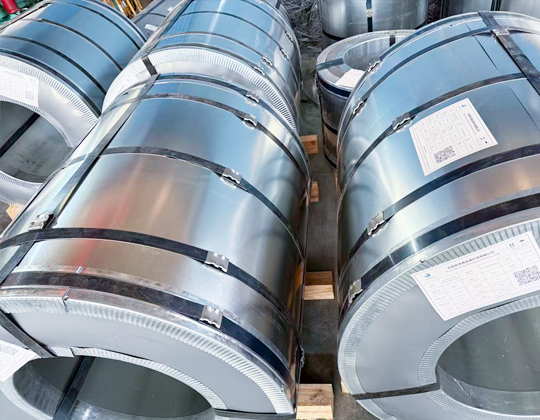
Alloy steel and silicon steel are two crucial materials in modern metallurgy, each engineered to meet distinct mechanical, magnetic, and industrial requirements. While alloy steel dominates structural, mechanical, and high-strength engineering applications, silicon steel (often called electrical steel) is indispensable in energy-efficient motors, transformers, and generators.
This in-depth guide explains everything you need to know — from chemical composition to industrial selection criteria
1. What Is Alloy Steel?
1.1 Definition
Alloy steel is steel intentionally alloyed with elements such as chromium, nickel, molybdenum, manganese, vanadium, and silicon to improve:
Strength
Hardenability
Toughness
Wear resistance
Corrosion resistance
Heat resistance
Silicon may also be included, but generally in small amounts (<0.6%) unless the steel has specific magnetic or structural requirements.
1.2 How Alloying Elements Improve Steel
Below is a summary of how common alloying elements influence performance.
Table 1 — Major Alloying Elements and Their Effects
Alloying Element
Primary Effects
Comments
Silicon (Si)
Strengthening, deoxidation, oxidation resistance
Typically <0.6% in most alloy steels
Chromium (Cr)
Corrosion and oxidation resistance, wear resistance
Essential in stainless steels
Nickel (Ni)
Toughness, low-temperature performance
Used in cryogenic steels
Manganese (Mn)
Hardness, strength, deoxidation
Improves hot workability
Molybdenum (Mo)
Creep resistance, strength at high temperature
Found in high-temperature steels
Vanadium (V)
Grain refinement, wear resistance
Common in tool steels
1.3 Types of Alloy Steel
Low-Alloy Steel
Contains <5% alloying elements. Used for pipes, gears, shafts, automotive parts.
Illustration Suggestion: Diagram showing interactions between alloying elements and the steel matrix (solid solution strengthening & carbide formation).
Enhances magnetic permeability: Better magnetic flux performance
Reduces magnetostriction: Less vibration & noise
Improves high-temperature oxidation resistance
2.3 Silicon Steel Categories
There are two main types:
A. Grain-Oriented Silicon Steel (CRGO)
Silicon ~3.0–3.5%
Has a strong Goss texture
Magnetic properties optimized in one direction
Used in transformers
Extremely low core loss
B. Non-Grain-Oriented Silicon Steel (CRNGO)
Silicon 0.5–3.25%
Magnetic properties isotropic
Used in motors, generators, rotating machinery
2.4 Microstructure Characteristics
Silicon influences:
Grain size (refinement)
Phase transformation temperatures (raises A1, A3)
Formation of ferrite & pearlite
Inclusion morphology
Electrical resistivity
Core loss mechanisms
2.5 Typical Silicon Levels in Steel
Table 2 — Silicon Levels by Steel Type
Steel Category
Silicon Content
Purpose
Carbon Steel
0.05–0.15%
Deoxidation
Low-Alloy Steel
0.1–0.3%
Strengthening & deoxidation
Silicon Steel
2.0–4.0%
Magnetic performance
High-Silicon Magnetic Steel
4.0%+
Very high resistivity
2.6 Applications of Silicon Steel
Power transformers
Distribution transformers
Motor stators and rotors
EV traction motors
Generators
Inductors
Magnetic cores
3.Metallurgical Behavior of Silicon Steel (Deep Dive)
Silicon steel behaves in a very special way once silicon enters the iron matrix. Even a small change in Si content can reshape the steel’s microstructure, magnetic response, and strength, so we often treat it as a separate class of alloy. Below is a deeper look at how it works inside the metal.
3.1 How Silicon Strengthens the Steel
Silicon atoms squeeze into the iron lattice, making it harder for dislocations to move. That resistance increases strength without using carbide-forming elements.
Key Points
Each 1% silicon can raise yield strength by 50–70 MPa.
It creates a “cleaner” matrix by helping remove oxygen during steelmaking.
It changes transformation temperatures, so heat treatments behave differently.
Table 1. How Silicon Impacts Strength
Mechanism
What Happens
Result
Solid Solution Strengthening
Si atoms distort iron lattice
Higher strength
Deoxidation
Si removes dissolved oxygen
Fewer inclusions
Phase Temperature Shift
A1 and A3 temperatures rise
More control during cooling
3.2 Microstructural Changes in Silicon Steel
As silicon enters ferrite, it alters the way grains grow and how inclusions form. The microstructure becomes more stable and more resistant to oxidation at high temperature.
What We See in the Microstructure
Finer grains during solidification
Lower number of harmful oxide inclusions
More stable ferrite region due to raised transformation temperatures
Cleaner grain boundaries that improve toughness
3.3 Influence on Magnetic and Electrical Behavior
The main reason we use silicon steel is its magnetic performance. Silicon changes how electrons flow inside the material, which helps machines like transformers and motors run efficiently.
Magnetic Effects
It boosts magnetic permeability, so the material channels flux better.
It lowers hysteresis loss, so less heat forms during magnetization cycles.
It reduces magnetostriction, cutting noise and vibration.
Electrical Effects
Silicon increases electrical resistivity.
Higher resistivity means fewer eddy currents and lower energy loss.
Thin laminated sheets work even better because currents can’t loop easily.
Table 2. Magnetic Benefits of Silicon
Property
Low Si
High Si (2–4%)
Why It Matters
Resistivity
Low
High
Cuts eddy current loss
Hysteresis Loss
High
Low
Saves energy
Magnetostriction
Noticeable
Very low
Reduces noise
Permeability
Moderate
High
Better transformer efficiency
3.4 Effects on Phase Transformations
Silicon lifts both A1 and A3 transformation temperatures. That shift changes how ferrite and pearlite develop. Engineers can slow or speed certain phase reactions, depending on cooling.
Simple Breakdown
Higher A1 → pearlite forms at higher temperatures
Higher A3 → ferrite region expands
More ferrite → improved magnetic behavior
Slow transformations → better control during rolling and annealing
3.5 Inclusion Behavior and Cleanliness
Silicon plays a big role in shaping inclusions. It reacts strongly with oxygen, so it helps remove it early in the steelmaking stage.
Inclusion Effects
Creates stable silicate inclusions
These inclusions tend to be smaller and more rounded
Smaller inclusions improve toughness and reduce crack sites
Cleaner steel → better magnetic uniformit
3.6 Processing Challenges Created by Silicon
Silicon helps performance, but it also creates hurdles. As silicon content rises, the steel becomes harder to cast, bend, and roll.
Real-World Challenges
Higher Si = lower ductility
Sheets can crack during cold rolling
Silica-rich slags may react with furnace linings
Casting segregation becomes more likely
High liquidus temperature makes melting trickier
Table 3. Processing Issues at High Silicon Levels
Si Level
Problem
Explanation
2%
Mild brittleness
Ferrite hardening
3%
Rolling cracks
Less ductile matrix
4%+
Severe brittleness
High lattice distortion
High-Si
Slag reactions
More silica formation
Heat Treatment and Texture Control
Silicon steel, especially grain-oriented grades, depends on precise annealing cycles to create the Goss texture needed for transformer cores. Any phase transformation during late processing can destroy the desired grain alignment.
What Manufacturers Must Control
Furnace temperature uniformity
Slag chemistry
Rolling reduction schedules
Annealing time and cooling rate
Impurities like sulfur and phosphoru
4. Alloy Steel vs Silicon Steel — Full Comparison
4.1 Quick Overview Comparison Table
Table 3 — Alloy Steel vs Silicon Steel
Feature
Alloy Steel
Silicon Steel
Purpose
Mechanical strength
Magnetic performance
Si Content
0.1–0.6%
1–4%
Primary Properties
Strength, wear resistance
High permeability, low core loss
Microstructure
Carbides, fine grains
Ferrite + controlled texture
Applications
Structural, mechanical
Electrical cores
Ductility
High
Low with high Si
Manufacturing
Easier to roll/form
Brittle when Si≥3%
Cost
Moderate
Higher due to processing
4.2 Mechanical Property Comparison
Table 4 — Mechanical Properties
Property
Alloy Steel
Silicon Steel
Tensile Strength
High
Moderate
Yield Strength
High
Moderate (unless specially alloyed)
Hardness
High
Low–Medium
Ductility
Good
Reduced with Si
Brittleness
Low
High at high Si content
4.3 Magnetic Property Comparison
Table 5 — Magnetic Characteristics
Magnetic Property
Alloy Steel
Silicon Steel
Magnetic Permeability
Low–medium
Very high
Hysteresis Loss
High
Very low
Eddy Current Loss
High
Very low
Core Efficiency
Low
High
Silicon steel clearly dominates for electromagnetic applications.
5. Silicon Steel vs Carbon Steel (Additional Comparison)
Table 6 — Silicon Steel vs Carbon Steel
Feature
Silicon Steel
Carbon Steel
Main Alloy
Silicon
Carbon
Magnetic Use
Yes
Limited
Electrical Loss
Very low
High
Applications
Transformers, motors
Structural & general use
Conductivity
High resistivity
Lower resistivity
6. How to Choose Between Alloy Steel and Silicon Steel
6.1 Choose Silicon Steel If You Need:
High magnetic permeability
Low electrical losses
Efficient electromagnetic performance
Materials for motors, generators, transformers
6.2 Choose Alloy Steel If You Need:
Structural strength
Wear resistance
Fatigue performance
High-temperature load-bearing ability
6.3 Industry-Specific Recommendations
Electrical Industry
Always choose silicon steel (CRGO or CRNGO).
Automotive / EV Motors
High-grade non-grain-oriented silicon steel.
Construction / Structural
Alloy steel is the correct choice.
Power Transmission
CRGO silicon steel for high-efficiency transformers.
7. Future Trends
7.1 High-Silicon Ultra-Low Loss Steel
Research aims to:
Reduce brittleness
Enhance rolling performance
Reduce Si content while retaining magnetic properties
7.2 Advanced Alloy Steels
Nano-structured steels
High-strength low-alloy (HSLA)
Lower-carbon eco-friendly steels
7.3 Sustainability & Recycling
More efficient ferrosilicon recovery
Lower-emission steel production technologies
Conclusion
Alloy steel and silicon steel serve completely different but equally vital roles in metallurgy. Alloy steel excels in mechanical performance, structural integrity, and durability, while silicon steel is unmatched in electrical efficiency, magnetic behavior, and low-loss performance. Understanding their chemistry, properties, and ideal applications ensures the right material is selected for engineering, manufacturing, or industrial needs.