CRGO lamination, or Cold-Rolled Grain-Oriented lamination, is a specialized form of electrical steel primarily used in transformer cores. This unique material is engineered to enhance magnetic properties by aligning its crystalline structure, which significantly reduces energy loss during operation. Composed mainly of iron with a small percentage of silicon, CRGO lamination is manufactured in thin sheets that optimize performance in high-efficiency transformers. In this article, we will explore the definition, composition, benefits, and applications of CRGO lamination, highlighting its vital role in modern electrical systems.
Understanding CRGO Steel
Definition and Composition
CRGO steel stands for Cold-Rolled Grain-Oriented steel. It is a special type of electrical steel designed specifically for use in transformer cores. The "grain-oriented" part means the steel's crystalline structure is aligned so magnetic properties are optimized in one direction. This alignment helps magnetic flux flow easily through the core, reducing energy loss.
CRGO steel mainly consists of iron with a small percentage of silicon (usually between 3% and 4%). Silicon increases electrical resistivity and reduces eddy current losses. The steel is cold-rolled to a thin sheet form, typically between 0.23 mm and 0.35 mm thick. This thinness helps reduce losses caused by eddy currents within the core.
Physical and Mechanical Properties
CRGO steel has specific physical and mechanical properties that make it ideal for transformer lamination:
● Density: About 7.65 g/cm³, which is typical for steel.
● Thickness: Ranges from 0.23 to 0.35 mm, thin enough to reduce eddy currents.
● Silicon content: 3-4%, enhancing magnetic and electrical characteristics.
● Yield strength: Varies by direction—approximately 330 N/mm² along the rolling direction and 355 N/mm² perpendicular.
● Tensile strength: Around 348 N/mm² along rolling and 412 N/mm² across.
● Elongation: 11% along rolling direction, 31% across, indicating flexibility.
● Hardness: About 204 HV, sufficient for durability.
● Stacking factor: Greater than 96%, meaning laminations stack tightly to minimize air gaps.
These properties ensure CRGO steel laminations are strong yet flexible enough for precise cutting and shaping during manufacturing.
Classification by Grade
CRGO steel comes in various grades, each with different thicknesses and core loss characteristics. Core loss is the energy lost as heat due to magnetic hysteresis and eddy currents when the steel is magnetized. Lower core loss means higher efficiency.
Here are some typical grades:
Grade | Thickness (mm) | Max Core Loss (W/kg) @ 1.5T | Max Core Loss (W/kg) @ 1.7T |
23HP8523ZDKH | 0.23 | 0.60 | 0.85 |
23HP9023M0-H | 0.23 | 0.64 | 0.90 |
27HP9527ZDKH | 0.27 | 0.66 | 0.95 |
30CG130M5 | 0.30 | 0.90 | 1.30 |
Grades with lower core loss are preferred for high-efficiency transformers. Thickness and grade selection depend on transformer size and application.
Tolerances and Quality Standards
Manufacturing CRGO steel laminations requires tight tolerances to ensure optimal performance:
● Width tolerance ranges from +0.00 to -0.15 mm for widths up to 100 mm, increasing slightly for wider sheets.
● Length tolerance varies from +0.00 to -0.30 mm for lengths up to 350 mm, with larger tolerances for longer sheets.
● Thickness tolerance is ±0.025 mm for thinner sheets and ±0.030 mm for thicker ones.
● Mitering angles and burr heights are controlled precisely to avoid assembly issues.
These standards ensure laminations fit together perfectly, reducing air gaps and losses.
Always verify CRGO steel grades and tolerances with suppliers to match your transformer's efficiency and durability requirements.
The Role of CRGO Lamination in Transformers
How CRGO Lamination Reduces Energy Loss
CRGO laminations play a crucial role in cutting down energy loss inside transformers. When alternating current flows through a transformer’s coil, it creates a changing magnetic field. This changing field induces tiny swirling currents called eddy currents in the core. These eddy currents waste energy as heat, lowering the transformer’s efficiency.
Laminating the core with thin sheets of CRGO steel breaks up the paths these eddy currents can take. Instead of flowing freely, the currents get confined to each thin lamination. This reduces their size and strength, cutting down heat loss significantly. The grain-oriented structure of CRGO steel helps, too, by allowing magnetic flux to pass easily along the steel’s grain direction, minimizing hysteresis loss.
The Impact on Transformer Efficiency
Using CRGO laminations boosts transformer efficiency in several ways:
● Lower Core Losses: Reduced eddy current and hysteresis losses mean less energy wasted as heat.
● Improved Flux Linkage: The grain-oriented steel aligns magnetic domains, allowing smoother magnetic flux flow.
● Reduced Noise and Heat: Less energy loss means the transformer runs cooler and quieter.
● Better Load Handling: Efficient magnetic properties enable transformers to handle higher loads without overheating.
For example, a transformer core built from high-grade CRGO laminations can achieve core losses as low as 0.6 W/kg at 1.5 Tesla, compared to much higher losses in non-oriented or thicker steel cores. This efficiency translates to lower operating costs and longer transformer life.
Benefits of Using CRGO Lamination
Beyond reducing energy loss and improving efficiency, CRGO laminations offer several benefits:
● Precision Manufacturing: Thin laminations can be cut accurately using CNC machines, ensuring tight stacking and minimal air gaps.
● Flexibility in Design: Laminations come in various shapes—step lap, mitered, or rectangular—to optimize magnetic performance for different transformer types.
● Durability: CRGO steel laminations resist mechanical stress and maintain magnetic properties over years of operation.
● Cost Savings: Lower losses reduce wasted electricity, saving money on energy bills and reducing cooling requirements.
● Environmental Impact: More efficient transformers mean less fuel burned at power plants, lowering carbon emissions.
In summary, CRGO laminations are not just components but essential enablers of modern transformer performance. They reduce energy loss, improve reliability, and help power grids run more efficiently.
Always select the highest-grade CRGO laminations matching your transformer’s voltage and size to maximize efficiency and reduce lifecycle costs.
Manufacturing Process of CRGO Lamination
Importation and Quality Standards
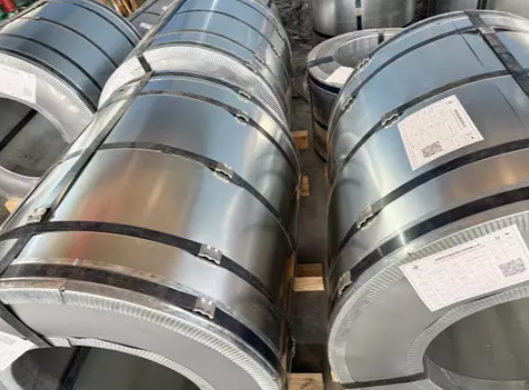
CRGO steel usually arrives as mother coils imported from top producers in countries like the USA, Japan, Korea, Germany, China, and Russia. These coils meet strict quality specs, such as those set by the Bureau of Indian Standards (IS 3024). Each batch comes with a Mill Test Certificate (MTC) and other documents to verify quality and traceability. This ensures the raw material’s magnetic and mechanical properties match the demanding needs of transformer cores.
Precision Processing Techniques
Turning raw CRGO steel coils into transformer laminations needs high precision. Specialized CNC machines cut the steel into thin sheets with exact dimensions and angles. These machines can handle widths from 25 mm up to 1050 mm and lengths from 100 mm to 5000 mm. They cut laminations at 90°, 75°, or 45° angles, depending on the design.
The cutting process controls:
● Width and length tolerances within tight limits to ensure laminations fit perfectly.
● Burr height and edge quality to avoid assembly problems.
● Mitering angles for accurate core assembly and minimal air gaps.
Such precision reduces losses and improves transformer efficiency by ensuring the magnetic flux flows smoothly through the core.
Types of Transformer Lamination Designs
CRGO laminations come in various shapes tailored to transformer types and performance goals. Common designs include:
● Conventional Designs: Basic rectangular laminations stacked to form the core.
● Horizontal Step Lap: Laminations overlap horizontally to reduce leakage flux and noise.
● Vertical Step Lap: Laminations overlap vertically, improving magnetic flux distribution.
● Reactor Core Designs: Specialized laminations for reactors, which handle reactive power.
Manufacturers can also provide complete core assemblies for transformers up to 20 MVA. These cores are tested for no-load losses and carefully packed, ready for coil insertion. Using preassembled cores saves labor and reduces material waste.
When selecting CRGO laminations, verify the supplier’s CNC cutting precision and quality certifications to ensure your transformer meets efficiency and durability targets.
Applications of CRGO Lamination
Use in Power Transformers
CRGO laminations are essential in power transformers. These transformers handle high voltages and large power loads in electrical grids. The grain-oriented steel laminations reduce core losses, which is critical for efficiency. Lower losses mean less wasted energy and cooler operation, improving reliability and lifespan. Power transformers often use thicker laminations, typically around 0.27 mm to 0.35 mm, balancing mechanical strength and low loss. The precise cutting and stacking of CRGO laminations ensure minimal air gaps, which helps maintain magnetic flux continuity. This leads to better voltage regulation and stable power delivery over long distances.
Distribution Transformers
Distribution transformers, which deliver electricity to homes and businesses, also rely heavily on CRGO laminations. These transformers operate at lower voltages and smaller sizes than power transformers but still require high efficiency to reduce operating costs. Thin CRGO laminations, usually around 0.23 mm, are preferred here to minimize eddy current losses. The laminations’ grain orientation optimizes magnetic flux flow, helping distribution transformers run cooler and quieter. This is especially important in urban areas where noise pollution matters. Additionally, efficient laminations reduce energy losses, which adds up to significant savings across millions of distribution transformers worldwide.
Specialized Applications
Beyond typical power and distribution transformers, CRGO laminations find use in specialized applications. For example:
● Instrument Transformers: These require precise magnetic properties for accurate measurement and protection of electrical systems. CRGO laminations ensure stable performance.
● Reactors and Chokes: Used for controlling reactive power and filtering harmonics, these devices benefit from CRGO’s low core loss and high magnetic permeability.
● High-Frequency Transformers: Although CRGO steel is mainly for 50/60 Hz applications, certain grades and lamination designs help improve performance in specific high-frequency scenarios.
● Renewable Energy Systems: Transformers in wind turbines and solar farms use CRGO laminations to maximize energy conversion efficiency.
In all these cases, CRGO laminations help maintain transformer efficiency, reduce heat generation, and extend equipment life.
When selecting CRGO laminations for your transformers, consider the specific application’s operating voltage, frequency, and load requirements to choose the optimal thickness and grade for maximum efficiency.
Advantages of CRGO Lamination
Enhanced Electrical Performance
CRGO laminations boost electrical performance significantly. Their grain-oriented structure aligns magnetic domains, allowing magnetic flux to flow easily through the transformer core. This reduces hysteresis loss, which happens when magnetic materials resist changes in magnetization. The thinness of CRGO laminations also limits eddy currents—tiny circular currents that waste energy as heat. By breaking the core into thin layers, these currents get confined, reducing their strength and minimizing energy loss.
Together, these properties make transformers more efficient, cutting down on wasted electricity. For example, transformers using high-grade CRGO laminations can achieve core losses as low as 0.6 W/kg at 1.5 Tesla, which is much better than non-oriented steels. The result is less heat generation, quieter operation, and improved voltage regulation. This means transformers can handle higher loads safely without overheating.
Cost Efficiency
Using CRGO laminations helps save money over a transformer's lifetime. Lower energy losses mean less electricity wasted, which directly reduces operating costs. Because transformers run cooler, they require less cooling infrastructure, saving on maintenance and energy for cooling systems.
Additionally, CRGO laminations' durability means fewer replacements and repairs. Precision manufacturing ensures tight stacking and minimal air gaps, which keeps efficiency high and prevents early wear. Although CRGO steel laminations might cost more upfront than regular steel, their energy savings and longer life make them more economical in the long run.
Longevity and Durability
CRGO laminations are tough and built to last. Their mechanical strength allows them to withstand the stresses of transformer operation, including thermal expansion and mechanical vibrations. The steel’s hardness and flexibility enable precise cutting and shaping without cracking.
Their resistance to mechanical stress and stable magnetic properties over years of use means transformers maintain performance without degradation. This durability reduces downtime and replacement costs. Moreover, less heat generation inside the core extends the life of insulation and other transformer parts, contributing to overall longevity.
Choose CRGO laminations that balance thickness and grade to optimize both efficiency and cost for your specific transformer application.
Challenges in CRGO Lamination
Technical Challenges in Manufacturing
Producing high-quality CRGO laminations demands extreme precision. The steel must be cut very thin—usually between 0.23 and 0.35 mm—without causing cracks or warping. Maintaining tight tolerances on thickness, width, and length is critical to ensure laminations stack perfectly. Any deviation creates air gaps, increasing energy loss.
Cutting angles, such as 45°, 75°, or 90°, require advanced CNC machines that operate flawlessly. Burrs or rough edges can affect assembly and magnetic performance, so controlling burr height within microns is essential. Additionally, the grain orientation must be preserved during processing; mishandling can disrupt magnetic alignment, reducing efficiency.
Heat treatment and insulation coating processes add complexity. The coating insulates laminations electrically but must be uniform and durable to prevent short circuits and corrosion. Achieving consistent coating thickness without damaging the steel surface challenges manufacturers.
Market and Supply Chain Issues
CRGO steel is a specialized product imported mainly from countries like Japan, Germany, and the USA. Supply chain disruptions, geopolitical tensions, or raw material shortages can delay deliveries and increase costs. Quality variations between suppliers also pose risks, requiring thorough inspection and testing.
Demand fluctuates with transformer manufacturing trends and power sector investments. Sudden spikes in demand may strain producers, leading to longer lead times. Conversely, slow market periods pressure manufacturers to optimize production efficiency and reduce costs.
Recycling CRGO steel laminations is difficult due to coating and grain orientation preservation. This limits sustainable supply options and increases reliance on virgin materials.
Future Prospects and Innovations
The CRGO lamination industry is evolving to meet rising efficiency and environmental standards. Innovations focus on:
● Advanced Coatings: Developing thinner, more durable insulation layers to reduce losses and improve lifespan.
● Laser Cutting: Precision laser technology offers cleaner cuts with minimal burrs and faster processing times.
● Automation and AI: Smart manufacturing systems optimize production parameters, reduce defects, and improve yield.
● Material Enhancements: Research into new alloys or nano-structured steels aims to lower core losses further.
● Sustainability: Efforts to recycle laminations or develop eco-friendly coatings will reduce environmental impact.
These advances promise to overcome current challenges, enabling CRGO laminations to support next-generation transformers that are more efficient, reliable, and cost-effective.
Regularly audit your CRGO lamination suppliers for quality consistency and supply reliability to avoid production delays and ensure transformer performance.
Conclusion
CRGO steel laminations are crucial for transformer efficiency, reducing energy loss and improving performance. They offer enhanced electrical performance, cost savings, and durability. The industry faces challenges in manufacturing precision and supply chain issues but is evolving with innovations in coatings, cutting techniques, and sustainability efforts. As demand for efficient transformers grows, companies like Wuxi Sheraxin Electrical Steel Co., Ltd. provide high-quality CRGO laminations, ensuring reliable power delivery through advanced manufacturing and quality standards.
FAQ
Q: What is CRGO steel used for?
A: CRGO steel is primarily used for transformer cores due to its grain-oriented structure, which optimizes magnetic flux flow and reduces energy loss.
Q: How does CRGO lamination improve transformer efficiency?
A: CRGO lamination reduces energy loss by confining eddy currents and minimizing hysteresis loss, resulting in cooler and quieter transformer operation.
Q: Why is CRGO steel preferred over non-oriented steel?
A: CRGO steel is preferred because its grain-oriented structure allows better magnetic flux flow, reducing core losses and improving transformer efficiency.
Q: What factors affect the cost of CRGO laminations?
A: The cost of CRGO laminations is influenced by grade, thickness, supplier quality, and market demand, with higher-grade laminations typically costing more.
Q: How can CRGO lamination issues be troubleshooted?
A: Troubleshooting CRGO lamination issues involves checking for precise cutting, proper grain orientation, and consistent insulation coating to ensure optimal performance.


