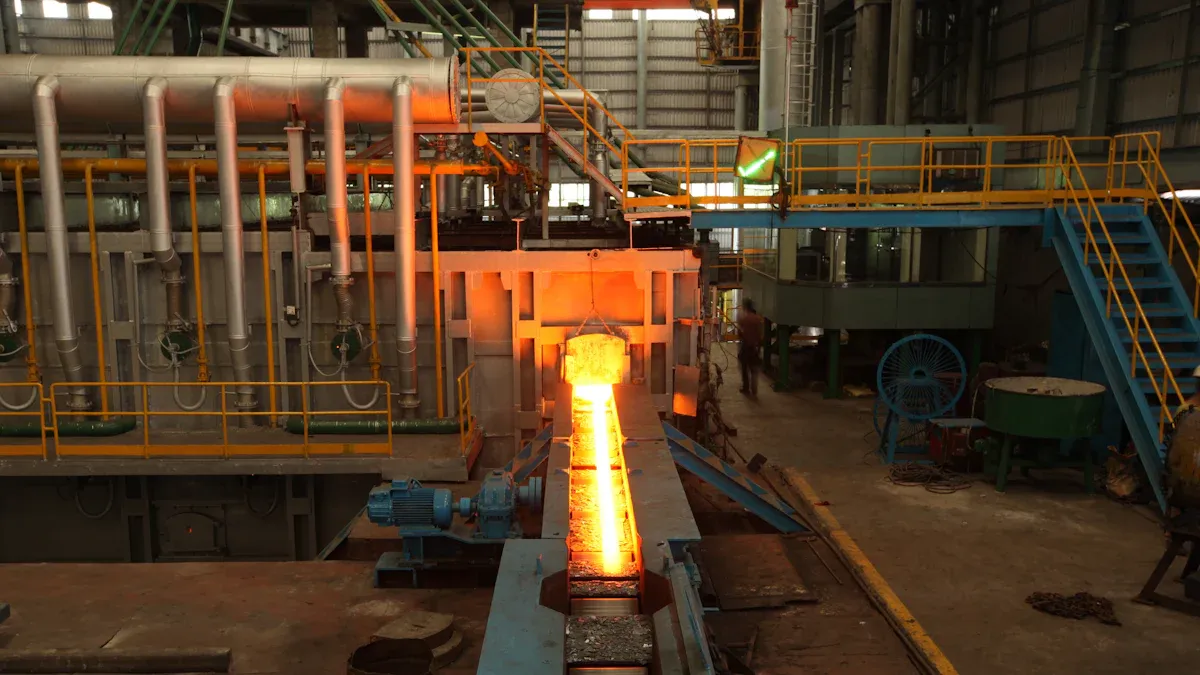
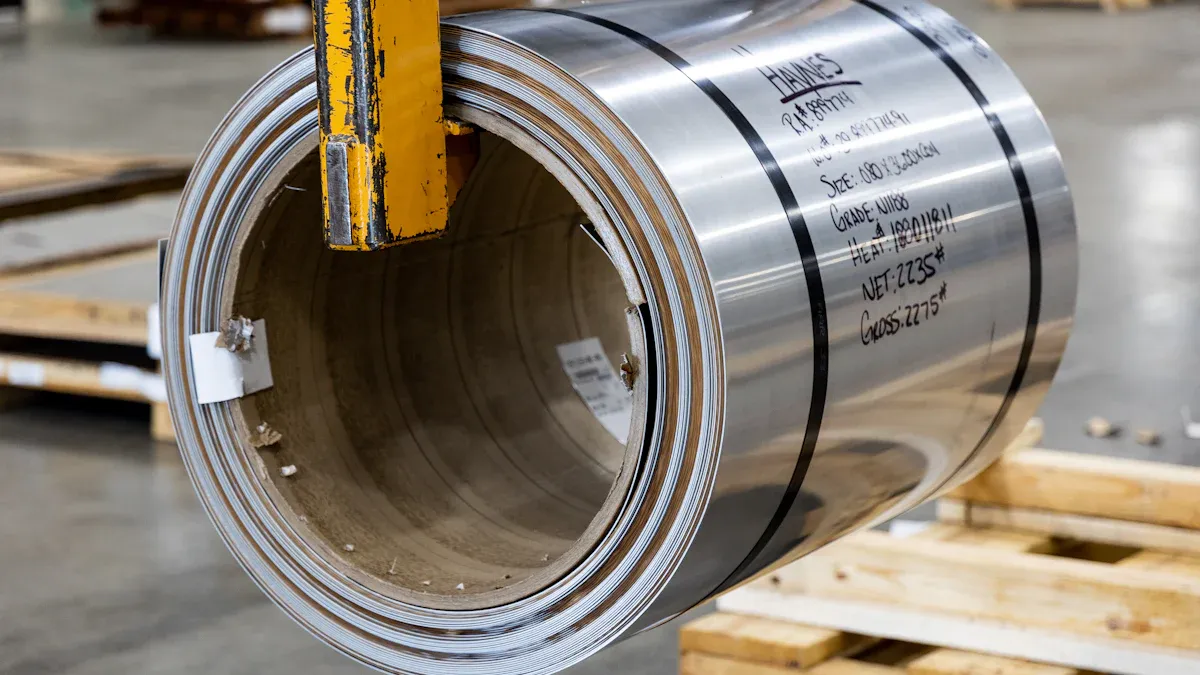
You make CRGO steel by following careful steps. Each step changes how the steel works with magnets. First, you melt and clean raw materials to make a silicon steel mix. Big rollers press the steel into thin sheets. You heat the sheets in a process called annealing. This makes a grain pattern that helps magnetic flux move. At the end, you check the sheets for thickness and grain direction to make sure they work well.
Here is a short summary of the main steps and why they are important:
Stage | Description | Importance for Magnetic Properties |
Raw Material Preparation | Melt and clean raw materials to make steel. | Makes the silicon steel mix needed for CRGO steel. |
Cold Rolling | Press steel into thin sheets. | Gets the right thickness and surface for the sheets. |
Annealing | Heat steel to make grains line up. | Lets magnetic flux move in just one direction. |
Finishing and Inspection | Check sheets for quality and grain direction. | Makes sure sheets meet the needs for good performance. |
Key Takeaways
CRGO Steel Manufacturing Process
Raw Material Selection
Importance of High-Quality Raw Materials
To make crgo steel, you must pick good raw materials. You need iron ore and silicon that are very pure. Pure materials help the steel work better in electrical devices. If the materials are clean, the steel has better resistivity and magnetic power. If there are impurities, magnetic domains cannot move well. This makes the steel less useful for its job. Adding more silicon helps resistivity and lowers energy loss. But, it also makes the steel harder to shape and work with.
Here is a table showing the typical chemical composition for electrical steels:
Steel Type | Nominal Composition | Primary Purpose | Key Effects |
Electrical Steel (Silicon Steel) | 2.0% – 4.0% | Magnetic properties | Increased permeability, reduced core losses |
High-Silicon Steel | 4.0% and above | Magnetic core applications | Superior magnetic performance, high resistivity |
Sheraxin's Approach to Material Selection
Sheraxin uses strict rules when picking raw materials. They know how to find the best silicon steel. This careful way helps Sheraxin make crgo steel that is always good. Using pure materials means the steel works well in advanced electrical tools.
Electric Arc Furnace Steelmaking
Advanced Steelmaking Techniques
After picking the best materials, you melt them. The electric arc furnace uses strong electric arcs to melt the mix. These arcs can get as hot as 3,000°C. The furnace lets you change the steel’s mix while it melts. You can change the current, voltage, and power to get the right mix. This step takes out bad stuff and makes the steel even and high quality.
Sheraxin's Steelmaking and Refining Capabilities
Sheraxin uses modern furnaces and refining machines. These tools give you many benefits:
You can make more or less steel as needed.
You can use different raw materials, like scrap or direct reduced iron.
You get steel with fewer bad things in it, which is great for crgo steel.
Sheraxin makes a lot of crgo steel and sells it worldwide. China, where Sheraxin works, makes over half of the world’s crgo steel. This means you can count on Sheraxin for steady supply and great results.
Cold Rolling and Grain Orientation
Cold Rolling Process
You begin with high-silicon steel alloy made into ingots. These ingots are hot-rolled into thin strips. After hot rolling, the strips are annealed in a special atmosphere. This step helps make a unique texture in the steel. Next, the strips are cold-rolled at room temperature. Cold rolling makes the strips thinner, between 0.1 mm and 0.5 mm. This step also makes the grain structure better and the steel stronger.
Here are the main steps in the cold rolling process for crgo steel:
Casting: High-silicon steel alloy is cast into ingots.
Hot Rolling: The ingots are hot-rolled into thin strips.
Annealing: The strips are annealed to form a special grain texture.
Cold Rolling: The strips are cold-rolled to the final thickness.
Cold rolling forms a Goss texture. This texture lines up the grains with the rolling direction. Lined-up grains help magnetic properties and lower core losses. The steel has higher permeability and works better in electrical uses.
Key Advantages of Cold-Rolled Electrical Steel | Description |
Directional Magnetic Properties | Magnetic flux density is up to 30% better in the rolling direction. |
Reduced Core Losses | Core loss values are between 0.9-1.5 W/kg at 1.7T/50Hz. |
Enhanced Efficiency | Transformers using this steel can reach 97-99% energy efficiency. |
Improved Permeability | High permeability in the rolling direction, often between 1500-1800. |
Grain Orientation Techniques
Grain orientation techniques help grains in crgo steel line up with the magnetic flux path. This makes it easier to magnetize and lowers core losses. Adding silicon helps grains point in the easy magnetization direction. When tension is used, magnetization lines up with the tension. This makes magnetization easier. If pressure is used, magnetization goes sideways to the pressure. This makes magnetization harder.
Grain orientation in electrical steel lets magnetic domains line up with the magnetic field. This lowers domain wall pinning and hysteresis losses. The steel works better in transformers and other electrical devices. Good grain alignment is important for both magnetic and mechanical properties.
Tip: Grain-oriented steel is best for transformer cores. It saves energy and helps transformers work better.
Annealing, Decarburization, and Coating
Annealing for Grain Structure
You heat crgo steel to change its grain structure. This helps the steel work better with magnets. Annealing has three main steps. First, you heat the steel to between 550°C and 700°C. Next, you keep the steel at this temperature for a while. Last, you let the steel cool down slowly.
During annealing, the steel goes through different stages. In the recovery stage, you heat the steel below the recrystallization point. This step lowers stress and core loss. In the recrystallization stage, you heat the steel above the recrystallization temperature. New grains form, and grains get bigger. In the grain growth stage, you keep the steel hot so grains can grow more.
If you anneal at lower temperatures, the steel changes less. But core loss still drops. At higher temperatures, new grains form. The steel’s magnetic properties get even better. Annealing also brings back magnetic properties and changes the microstructure. This helps lower power losses.
Findings | Description |
Magnetic Properties Restoration | Annealing brings back some magnetic properties by recovery and recrystallization. |
Microstructure Changes | The microstructure changes a lot during annealing, which affects magnetic losses. |
Power Loss Behavior | Power losses change with deformation direction, and microstructure explains this. |
Decarburization Process
Decarburization takes carbon out of the steel. You heat the steel to high temperatures, usually above 700°C. Carbon reacts with gases like oxygen or hydrogen and leaves the steel. This step makes the steel softer and easier to shape. It also helps the steel work better with magnets and lowers core losses. When you cut carbon to less than 0.06%, you stop aging and reduce eddy currents. This change raises electrical resistivity and helps transformers work better.
Decarburization means removing carbon from the steel’s surface layer. It happens when high carbon steel is heated in a carbon dioxide atmosphere. The process uses reversible reactions to lower carbon content.
Insulating Coating Application
After annealing and decarburization, you put a thin insulating coating on the steel. The coating is usually 2 to 5 micrometers thick. It helps lower eddy current losses and keeps steel layers apart. You can pick different coatings:
Coating Type | Properties |
Organic Coating (C3) | Varnish that works at about 180°C |
Semi Organic Coating (C6) | Mix of organic and inorganic, good for welding |
The coating adds tensile stress, which makes magnetic domains smaller and boosts performance. It protects the steel from rust and helps it last longer. The coating keeps the steel strong and reliable in transformer cores. You get less noise, lower energy loss, and better durability.
The insulating coating adds helpful tensile stress and makes magnetic domains smaller, which improves performance.
It helps the steel resist rust and stay strong.
The coating keeps steel pieces apart, lowers eddy current loss, and makes the steel work better.
Cutting and Quality Control
Precision Cutting of Laminations
You must cut CRGO steel laminations very carefully. This helps you get the right shapes and sizes for transformer cores and motor parts. First, you check the steel coils to see if they are good. You look at their size and surface. After checking, you cut big coils into thin strips. You need to be careful so you do not waste steel. Then, you use fast presses or laser cutters to make special shapes. These shapes can be E, I, or L forms.
Here is how the cutting process goes:
You check CRGO steel coils for quality and size.
You cut the coils into thin strips for laminations.
You use a punch or laser cutter to make the shapes you need.
How you cut the steel changes its magnetic properties and accuracy. Laser cutting can make a hot area that hurts magnetic properties. Losses can go up by more than 100% compared to mechanical cutting. Mechanical cutting can also cause stress and bend the edges. This makes magnetic performance worse. You need to pick the best cutting method to keep the steel’s magnetic properties strong.
Cutting Method | Impact on Magnetic Properties | Dimensional Accuracy |
Laser Cutting | Can raise losses, hot zone | Very exact |
Mechanical Cutting | Can cause stress, bad edges | High accuracy |
Final Testing and Inspection
You must test and check each lamination before sending it out. These checks make sure the steel meets tough rules for electrical and size properties. You use different tests:
Test Type | Description |
Chemical Composition Test | Checks what chemicals are in the steel. |
Mechanical Property Test | Looks at how strong and stretchy the steel is. |
Hardness Test | Tests how hard it is to poke through the steel. |
Ultrasonic Testing (UT) | Finds problems inside the steel. |
You also check thickness, width, and core loss numbers. Thickness can be from 0.18 mm to 0.35 mm. Width can be from 50 mm to 1050 mm. Core loss must be low, with a top value of 0.85 W/Kg for 0.23 mm thickness. Lamination factor should be 97.5% for the best quality.
Tip: Careful cutting and testing help you get CRGO steel laminations that work well in transformers and motors. You keep losses low and efficiency high.
Every step in making crgo steel changes how it works. Hot rolling, silicon alloy coating, and annealing all help the steel work better. These steps make the steel good for transformers and motors. But there can be problems. Rolling mistakes, bad annealing, or coating issues can hurt the steel.
Application | Performance Requirements |
Transformers | Low core loss, high permeability, excellent magnetic flux density |
Electric Motors | Low core loss, high permeability, excellent magnetic flux density |
Certified products follow strict rules. They help your devices work well and last longer.
FAQ
What does CRGO stand for?
CRGO means Cold Rolled Grain Oriented steel. This steel is used in electrical transformers. The grains are lined up to help magnetic flux move. This makes energy loss lower.
Why do you add silicon to CRGO steel?
Silicon is added to make the steel resist electricity better. This helps lower core losses and makes magnetic properties stronger. Silicon also makes the steel harder, so you must be careful with it.
How does grain orientation help transformers?
Grain orientation lines up the grains with the magnetic field. This gives better magnetic performance and less energy loss. Transformers work more efficiently because of this.
Can you recycle CRGO steel?
Yes, CRGO steel can be recycled. You melt it and use it to make new steel things. Recycling saves both resources and energy.
What is the typical thickness of CRGO steel sheets?
CRGO steel sheets are usually 0.18 mm to 0.35 mm thick. Thinner sheets help lower core losses in transformers.