Transformer core materials should be selected for the operating frequency, waveform, flux density and thermal limits of the design. CRGO, amorphous and nanocrystalline materials all serve useful roles, but they are not interchangeable upgrades.
CRGO is an established choice for power-frequency transformers. Iron-based amorphous alloys are important candidates when low no-load loss is a priority. Nanocrystalline alloys are used in applications including current transformers and selected medium-frequency power transformers.
The right comparison starts with the application and finished-core data, rather than a claim that one material always has the lowest loss.
Table of Contents
Toggle
CRGO, Amorphous and Nanocrystalline Cores at a Glance
Selection Point
CRGO
Iron-Based Amorphous
Iron-Based Nanocrystalline
Structure
Crystalline electrical steel with a preferred grain orientation
Metallic ribbon without long-range crystalline order
Very fine crystalline structure developed through controlled heat treatment
Common Evaluation Context
50/60 Hz power and distribution transformers
Low-no-load-loss distribution transformers
Current transformers and selected medium-frequency or switching applications
Main Design Interest
Directional magnetic performance and established core production routes
Reduced excitation loss in a suitable transformer design
High permeability and useful loss performance in suitable grades
Processing Focus
Rolling direction, joints, burrs and coating integrity
Ribbon handling, core forming, heat treatment and mechanical protection
Annealing condition, core geometry, insulation and protective packaging
Key Caution
Material test values do not directly predict finished-transformer loss
Changing material may require a different core and winding design
A grade intended for a choke is not automatically suitable for a power transformer
This comparison concerns transformer-related uses of these material families. It does not imply that every alloy, core shape or heat-treatment condition within a family has the same properties.
What Each Core Material Offers
CRGO: An Established Route for Power-Frequency Transformers
Cold-rolled grain-oriented electrical steel has a preferred magnetic direction aligned with rolling. Core cutting and assembly should place the intended flux path appropriately relative to that direction.
CRGO electrical steel is supplied in grades and thicknesses for transformer applications. It can be processed into stacked laminations or wound-core arrangements, depending on the design.
Core joints, cutting stress, burrs and clamping conditions affect the assembled result. Selecting a better coil grade alone does not guarantee an equivalent improvement in finished-transformer performance.
Amorphous Cores: A Candidate for Lower No-Load Loss
Iron-based amorphous ribbon is produced without the long-range crystalline order found in conventional electrical steel. Appropriate alloys and processing can provide low excitation loss.
Metglas's amorphous transformer material information identifies commercial and distribution transformer applications. Any published improvement should be checked against the stated reference design and operating conditions.
The material change may require different flux-density choices, core dimensions and manufacturing arrangements. Annealed ribbon also requires appropriate handling and protection. Amorphous material should not be substituted into a CRGO drawing without design review.
Nanocrystalline Cores: Match the Grade to the Function
Nanocrystalline alloys contain very fine crystals developed through controlled heat treatment of a precursor ribbon. The resulting magnetic properties depend on alloy and annealing condition.
Applications include current transformers, while selected grades and core constructions are used for medium-frequency power conversion. VAC's technical information on medium-frequency transformer cores illustrates this application area.
Permeability, hysteresis-loop shape and loss curves must suit the function. A high-permeability measurement core and a power-transfer core have different selection criteria even when both are described as nanocrystalline.
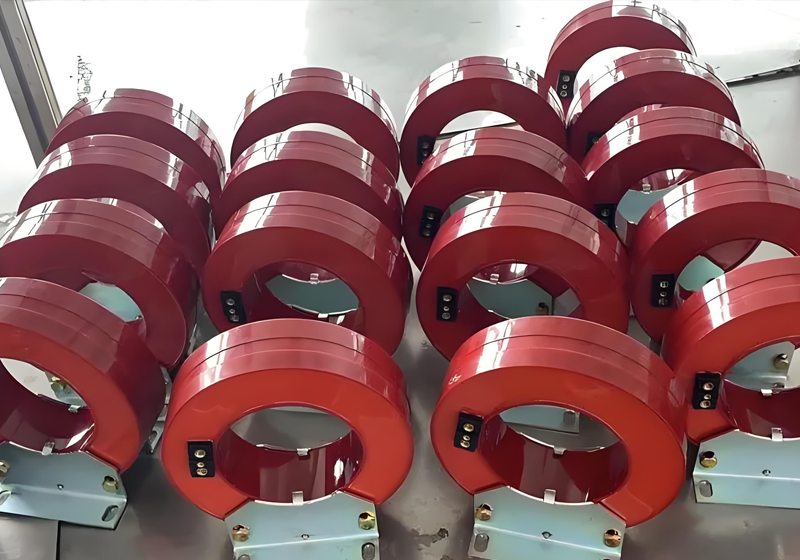
Current-transformer application example. The photograph does not identify the internal core alloy.
How to Compare Magnetic Performance Fairly
Use the Same Frequency, Waveform and Flux Conditions
A loss figure measured at power frequency cannot be compared directly with one measured at a switching frequency. Peak flux density, waveform, temperature and test method must also be specified.
Request loss curves around the intended operating point. For switching transformers, evaluate the actual excitation rather than assuming that a sinusoidal data-sheet value represents the complete application.
Separate Saturation Flux Density from Operating Flux Density
Saturation is a material limit, not the recommended design point. Operating flux needs margin for temperature, voltage variation, transients and any relevant DC bias or volt-second imbalance.
Compare temperature-dependent magnetic data and the proposed operating point for each candidate. A material with a higher saturation value is not automatically the smallest or most efficient choice at every frequency.
Distinguish Core Loss from Total Transformer Loss
A lower-loss core does not automatically produce the lowest total loss. Winding resistance, load current, leakage fields and cooling also matter.
For continuously energized equipment operating at light load, no-load loss can carry significant lifecycle value. For other applications, winding losses, power density or thermal performance may weigh more heavily in the decision.
Require finished-core or transformer validation under the agreed conditions. Keep incoming material certificates separate from assembled-equipment acceptance results.
Processing, Procurement and Cost Considerations
Compare the Finished Core, Not Only Material Price
Include conversion yield, tooling, heat treatment, insulation, housings, handling and inspection when comparing core costs. Changes in core geometry can also affect winding length, assembly and enclosure requirements.
For CRGO production, specify slit-coil dimensions, rolling-direction identification, edge quality and coating requirements. Confirm any proposed downstream annealing with the supplier, especially for domain-refined grades.
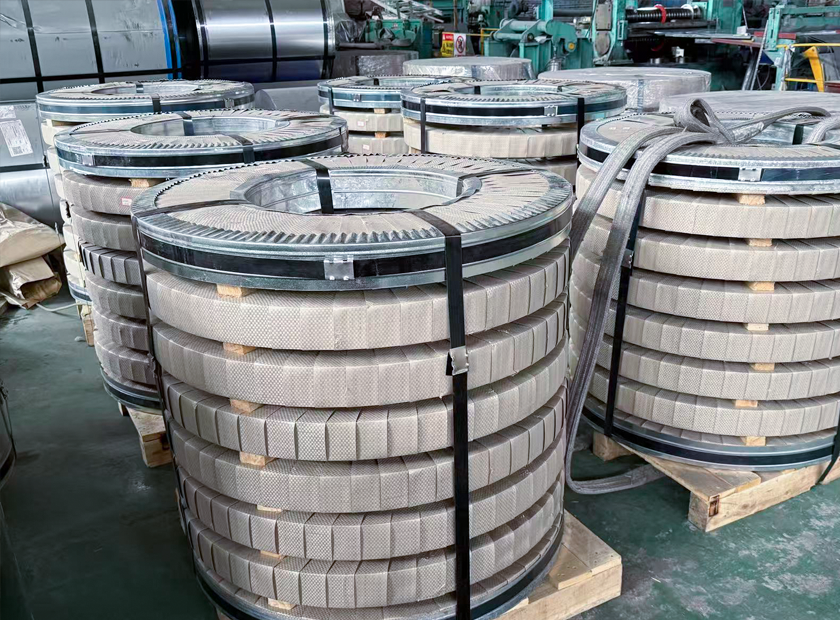
Electrical steel supply form for downstream core processing; this is not an amorphous or nanocrystalline core photograph.
Match the Supply Form to Your Manufacturing Route
Decide whether you need strip, laminations, an annealed core, a cut core or a protected finished component. These supply forms involve different responsibilities and acceptance checks.
Provide the transformer function, power rating, frequency, waveform, proposed flux density, temperature limits, geometry and required supply condition. Include loss targets, excitation requirements and the intended test method where available.
For a current transformer, also define accuracy and excitation requirements. For a switching power transformer, identify the converter operating conditions. A material name alone is not a complete specification.
Frequently Asked Questions
1. Which transformer core material is best?
There is no universal winner. CRGO is established for power-frequency transformers, amorphous material can suit low-no-load-loss designs, and selected nanocrystalline grades serve measurement and power-conversion applications.
2. Are amorphous and nanocrystalline cores the same?
No. Amorphous material lacks long-range crystalline order. Nanocrystalline material has a very fine crystalline structure developed through controlled processing. Their performance depends on the particular alloy and treatment.
3. Can nanocrystalline cores operate at 50/60 Hz?
Yes, including in certain current-transformer applications. That does not establish that any nanocrystalline grade is an economical replacement for a CRGO power-transformer core.
4. Can an amorphous core replace CRGO without changing the design?
Do not assume so. Flux density, dimensions, windings, assembly and thermal performance need review. Validate the redesigned transformer rather than relying only on a material comparison.
5. Does lower core loss guarantee lower total cost?
No. Compare purchase and processing costs with operating losses, service conditions and expected life. The result depends on the actual design and loading profile.
Discuss CRGO Material Requirements with SHERAXIN
Contact SHERAXIN with your transformer application, CRGO specification, strip dimensions and processing route to discuss electrical steel supply options and supporting material information.