Introduction
Ever wonder why transformers waste energy? Silicon steel cuts losses and boosts efficiency. In this article, you will learn how it improves core design, saves energy, and ensures reliable transformer performance.
Understanding Silicon Steel and Its Role in Transformers
What is Silicon Steel?
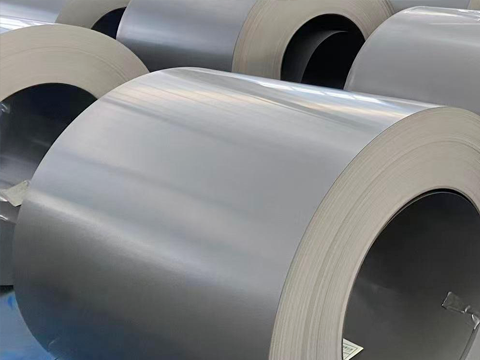
Silicon steel, commonly known as electrical steel, is a specialized iron alloy that contains 2–4% silicon, specifically designed to optimize the magnetic performance of transformer cores. This material plays a crucial role in modern transformer design by reducing hysteresis and eddy current losses, which are primary sources of wasted energy during operation.
Engineers prefer silicon steel because it delivers consistent magnetic behavior, even under varying loads, which is critical for transformers running continuously in industrial and renewable energy applications.
There are two main types of silicon steel:
● CRGO (Cold Rolled Grain Oriented):
Engineered for transformer cores, it exhibits high magnetic permeability along the rolling direction, minimizing core losses. Its domain refinement and annealing processes ensure the material can efficiently handle alternating magnetic flux with minimal energy waste.
● CRNGO (Cold Rolled Non-Grain Oriented):
Used primarily in motors and generators, this type provides uniform magnetic properties in all directions, supporting rotating magnetic fields and helping improve overall energy conversion efficiency.
Type | Primary Application | Magnetic Properties | Main Advantage |
CRGO | Transformers | High permeability along rolling direction | Reduced no-load and core losses |
CRNGO | Motors, Generators | Uniform magnetic behavior | Stable efficiency across rotating flux |
Silicon steel also has excellent thermal stability, allowing transformer cores to operate at elevated temperatures without losing performance. Its high electrical resistivity reduces the formation of eddy currents, preventing excessive heat generation and ensuring the transformer can sustain long-term operation efficiently.
Why Silicon Steel is Used in Transformer Cores
Transformer efficiency depends largely on the core material, as it directs the magnetic flux generated by the primary winding to the secondary winding. Silicon steel is widely used because it optimizes energy transfer while reducing losses that would otherwise convert electricity into heat. It enables transformers to maintain high performance across different load conditions, from light to peak demand.
Key reasons silicon steel is chosen:
● High magnetic permeability:
The material magnetizes easily, allowing the core to respond quickly to alternating current changes. This increases induction efficiency without requiring additional power.
● Low electrical conductivity:
By restricting eddy current formation, silicon steel prevents unnecessary heat buildup, which reduces energy loss and prolongs the operational life of the transformer.
● High saturation magnetization:
It carries large magnetic flux densities without entering saturation, ensuring efficient operation under high load conditions.
● Mechanical durability:
Compared to amorphous steel, silicon steel offers higher strength and can withstand thermal expansion and mechanical stresses during assembly and operation.
These properties make silicon steel cost-effective and reliable, supporting transformers that are not only energy-efficient but also safer and more robust for continuous operation in industrial, commercial, and renewable energy systems.
Comparing Silicon Steel with Other Core Materials
Although amorphous steel has become known for extremely low no-load losses, silicon steel remains a popular choice due to its versatility and practical advantages. Its combination of magnetic, thermal, and mechanical properties ensures that transformers remain efficient, safe, and cost-effective.
Feature | Silicon Steel | Amorphous Steel |
Core loss | Moderate | Very low |
Hysteresis loss | Low | Minimal |
Mechanical strength | High | Fragile, prone to damage |
Cost | Moderate | High |
Manufacturing scalability | Large-scale, flexible | Limited, specialized |
Thermal stability | High | Moderate |
In practice, silicon steel offers several advantages over amorphous steel in core transformer design:
● Ease of manufacturing:
CRGO and CRNGO sheets are widely available, and laminations can be produced in high volumes.
● Structural stability:
Silicon steel withstands mechanical handling and assembly stresses better than thin amorphous ribbons.
● Temperature resilience:
Its low thermal expansion and good conductivity maintain core integrity under fluctuating temperatures.
● Cost-efficiency:
It balances performance and cost, making it suitable for both small and large-scale transformer projects.
This combination of properties explains why silicon steel continues to be the foundation of efficient transformer cores. It provides a reliable benchmark against which innovations, like amorphous steel, are measured, ensuring energy-efficient operation across industrial, commercial, and renewable applications.
Efficiency Benefits of Silicon Steel in Transformer Design
Minimizing Core Losses
Silicon steel plays a crucial role in reducing core losses in transformers, which consist mainly of hysteresis losses and eddy current losses. Hysteresis occurs when magnetic domains lag behind the alternating magnetic field, turning some electrical energy into heat. Eddy currents, loops of induced current inside the steel, produce additional heat and waste energy.
Using thin laminated sheets of silicon steel drastically limits these currents, as each lamination acts as an electrical barrier. This approach allows transformers to achieve higher efficiency and longer operational life.
● Hysteresis reduction:
Grain-oriented CRGO silicon steel aligns magnetic domains, minimizing energy lost in cycling.
● Eddy current suppression:
Thin lamination and high electrical resistivity prevent circular currents, reducing heating.
● Quantitative benefits:
Typical transformers using CRGO sheets see core loss reductions up to 30–50% compared to standard steel cores.
Loss Type | Traditional Steel | Silicon Steel CRGO | Energy Saving (%) |
Hysteresis | High | Low | 25–40 |
Eddy Current | Moderate | Minimal | 30–50 |
Total Core Loss | 100% | 55–65% | 35–45 |
Thermal Performance and Stability
Heat management is critical for transformer reliability. Silicon steel exhibits excellent thermal conductivity, dissipating heat generated by core losses efficiently. Its low thermal expansion maintains lamination alignment, preventing deformation and insulating breakdown. These properties ensure the core can operate safely under continuous load and temperature fluctuations, reducing the risk of mechanical stress or failure.
Key points include:
● Heat spreads evenly across laminations, maintaining uniform magnetic properties.
● Mechanical integrity remains stable during temperature changes, minimizing gaps that could reduce efficiency.
● Enhanced thermal resilience contributes to long transformer lifespan and fewer maintenance interventions.
Operational Energy Savings
Silicon steel helps transformers achieve significant energy savings over their lifetime. By combining low hysteresis and eddy current losses, it reduces electricity consumption while keeping operational costs down. Despite slightly higher upfront material costs, the overall savings outweigh initial investment, particularly in industrial and renewable energy systems that run continuously.
● Energy efficiency improves by maintaining high magnetic permeability even under fluctuating loads.
● Maintenance intervals extend due to reduced thermal stress and lower core heating.
● Ideal for applications such as power plants, commercial distribution, and solar/wind energy systems where energy conservation is vital.
Application | Efficiency Gain | Lifetime Savings |
Industrial Transformers | 5–8% | High |
Commercial Grids | 4–7% | Moderate |
Renewable Energy Systems | 6–10% | Significant |
Sheraxin’s CRGO and CRNGO silicon steel products support these operational benefits by offering precisely controlled lamination thickness, high magnetic permeability, and uniform coatings, enabling transformers to reach optimal energy performance without compromising safety or durability.
Design Considerations for Silicon Steel Transformers
Laminations and Core Assembly
When designing transformer cores, lamination thickness is critical. Thinner silicon steel sheets reduce eddy currents, which otherwise generate heat and decrease efficiency. CRGO silicon steel needs precise grain orientation along the rolling direction to guide magnetic flux optimally.
CRNGO provides more uniform magnetic behavior, making it suitable for motors or rotating equipment. Coatings and insulation on each lamination enhance interlaminar resistance, preventing energy loss and extending core life. Proper stacking and alignment of laminations ensures even flux distribution, avoids hot spots, and maintains consistent transformer performance.
● Precision cutting and slitting maintain tight tolerances, improving fit and performance.
● Coating and insulation resist oxidation and reduce mechanical wear.
● Stacking order preserves magnetic integrity and limits local energy loss.
Optimizing Magnetic Properties
Silicon steel cores achieve superior performance through domain refinement and controlled annealing. These processes align magnetic domains, lower internal stress, and maximize magnetic permeability while minimizing coercivity. High permeability allows the core to magnetize quickly under alternating current, and low coercivity reduces hysteresis losses, improving efficiency during continuous operation. Maintaining consistent magnetic properties across all laminations prevents localized inefficiencies, which is crucial for industrial and commercial transformers.
● Domain refinement:
Improves magnetic alignment and reduces hysteresis loss.
● Annealing:
Relieves mechanical stress, stabilizing permeability.
● Uniform laminations:
Ensures consistent performance across different load conditions.
Integrating Silicon Steel with Amorphous Core Elements
Hybrid transformer cores can combine silicon steel and amorphous steel to balance efficiency, durability, and cost. Silicon steel offers mechanical strength and thermal stability, while amorphous steel reduces no-load losses. This combination is especially useful in high-efficiency transformers for industrial facilities, renewable energy systems, or smart grids where energy savings are essential. Engineers must carefully design lamination sequences, align grain orientation, and consider cost-to-performance trade-offs to maximize overall efficiency.
● Hybrid cores:
Provide structural stability and lower energy loss simultaneously.
● Material synergy:
Silicon steel handles mechanical stress, amorphous steel cuts no-load losses.
● Applications:
Ideal for transformers in solar, wind, and high-demand industrial grids.
Core Material | Primary Advantage | Typical Application | Key Benefit |
Silicon Steel | Mechanical strength, thermal resilience | Standard transformers, industrial grids | Low losses, robust structure |
Amorphous Steel | Ultra-low no-load loss | High-efficiency transformers, renewable energy | Minimized energy waste |
Hybrid Cores | Balance of performance and cost | Industrial, commercial, and renewable systems | Optimized efficiency and reliability |
Environmental and Economic Impact
Sustainability Benefits
Silicon steel significantly improves the energy efficiency of transformers, reducing both electricity losses and operational heat. Low core losses decrease the need for extra power generation, which directly cuts greenhouse gas emissions. In renewable energy grids, it ensures more electricity reaches consumers instead of being lost in the transformer core, improving the overall system efficiency.
Governments and regulators increasingly require transformers to meet energy efficiency standards, and silicon steel cores help manufacturers achieve compliance without sacrificing durability or performance. Its use in both industrial and commercial grids promotes sustainable energy practices while supporting modern infrastructure growth.
● Reduces energy consumption through low hysteresis and minimal eddy current losses, saving electricity over the transformer’s lifetime.
● Supports renewable energy integration by maintaining high core efficiency under fluctuating loads, such as in solar and wind applications.
● Lowers carbon footprint by decreasing dependence on fossil-fuel-generated electricity.
● Ensures compliance with global energy efficiency regulations, enabling eligibility for government incentives and sustainability programs.
Long-term Cost Advantages
Despite a higher initial investment compared to standard core materials, silicon steel provides substantial long-term financial benefits. By minimizing no-load and operational losses, transformers consume less electricity, leading to significant savings over their service life.
Additionally, silicon steel’s mechanical strength and thermal resilience reduce maintenance frequency and mitigate the risk of core deformation or insulation breakdown. Industries and utilities benefit from predictable operational costs, extended equipment longevity, and higher reliability, making silicon steel cores a practical choice for utility-scale and industrial transformer projects.
● Lower operational costs achieved through reduced core losses and efficient energy transfer.
● Maintenance intervals extend because thermal expansion is minimized, and mechanical stress on laminations is reduced.
● ROI is improved over decades of operation, especially in high-load applications where continuous performance is critical.
● Long lifecycle performance ensures transformers remain functional and efficient well beyond standard service durations.
Benefit Category | Silicon Steel Advantage | Impact on Transformers |
Energy Savings | Low hysteresis and eddy current losses | Reduced electricity consumption and operational costs |
Environmental | Less energy wasted | Lower greenhouse gas emissions, supports renewable grids |
Reliability | Thermal and mechanical stability | Fewer maintenance interventions, longer core life |
Economic | High efficiency over lifetime | Improved ROI for industrial and utility-scale applications |
Conclusion
Silicon steel enhances transformer efficiency by reducing energy loss and heat generation. Sheraxin’s products offer precise laminations, high magnetic permeability, and low core losses, delivering reliable, cost-effective performance while supporting sustainable energy solutions.
FAQ
Q: What is silicon steel used for in transformers?
A: Silicon steel improves magnetic efficiency and reduces energy losses in transformer cores.
Q: How does silicon steel reduce heat in cores?
A: Its high electrical resistivity and thin laminations limit eddy currents, lowering heat generation.
Q: Why choose silicon steel over other core materials?
A: It balances efficiency, mechanical strength, and cost for industrial and utility transformers.
Q: What are the cost benefits of silicon steel transformers?
A: Reduced no-load losses and lower maintenance improve long-term operational savings.
Q: Can silicon steel be combined with amorphous cores?
A: Yes, hybrid designs use silicon steel for stability and amorphous steel for minimal no-load loss.


