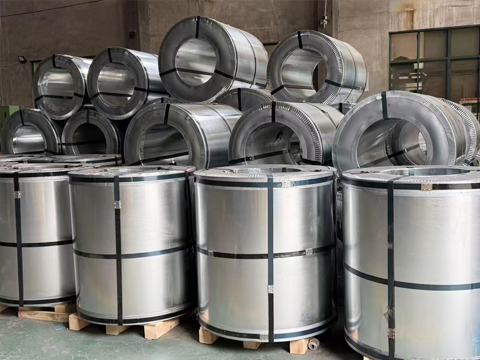
AI compute density is pushing legacy data center power distribution systems to their thermal and operational limits, exposing substation and facility-level power transformers as critical bottlenecks in infrastructure expansion. As rack densities climb well beyond traditional thresholds, the power infrastructure required to support these loads faces unprecedented stress. Inefficient step-down and distribution stages lead to compounding magnetic core losses, excessive heat generation, and inflated Power Usage Effectiveness (PUE) metrics. This wasted energy directly degrades the profitability and operational stability of high-density AI clusters, forcing facility operators to over-provision cooling systems.
Mitigating these losses requires a fundamental re-evaluation of transformer core materials at the engineering level. Relying on standard commodity materials is no longer viable for modern facilities. This guide examines how specifying the correct grades of Electrical Steel optimizes magnetic performance, reduces long-term operational expenses, and supports next-generation high-density power architectures.
Material Selection Dictates Efficiency: Specifying high-performance, thin-gauge Grain-Oriented Electrical Steel (GOES) in power transformers is non-negotiable for minimizing hysteresis and eddy current losses under continuous high-load AI environments.
PUE and Thermal Management: Upgrading transformer core materials directly reduces ambient heat generation at the substation and facility level, lowering secondary cooling demands and improving overall facility PUE.
Next-Gen Architecture Compatibility: As data centers transition toward 800V DC distribution and solid-state transformers (SSTs), electrical steel specifications must evolve to handle higher frequencies, complex harmonics, and non-linear loads.
Supply Chain Realities: Premium electrical steel grades face global supply constraints; procurement strategies must balance upfront material costs against long-term operational savings (OpEx) and lead times.
Table of Contents
Toggle
How Electrical Steel Improves AI Data Center Power Efficiency
Mapping the Power Path (Utility Feed to Server Rack)
Delivering power from high-voltage utility transmission lines down to low-voltage IT equipment involves multiple critical transformation steps. Each stage introduces potential energy losses that compound by the time power reaches the server rack. High-voltage power enters the facility substation, where primary transformers step it down to medium-voltage distribution levels. Secondary transformers then reduce this voltage further to feed Uninterruptible Power Supplies (UPS), Power Distribution Units (PDUs), and ultimately the server racks.
The efficiency of this entire chain relies heavily on the magnetic properties of the transformer cores used at each node. When power passes through a transformer, the alternating current in the primary winding creates a fluctuating magnetic field. This field is channeled through the core to induce a voltage in the secondary winding. If the core material resists this magnetic flux or allows stray currents to form, energy is lost as heat. Upgrading the core material ensures that the maximum amount of electrical energy is transferred across the magnetic bridge.
Utility Substation Step-Down: High voltage (e.g., 115kV or 230kV) is reduced to medium voltage (e.g., 13.8kV or 34.5kV) using massive liquid-filled transformers.
Facility Distribution: Medium voltage is routed through the data center campus to localized electrical rooms.
UPS and PDU Isolation: Dry-type transformers step the voltage down to usable levels (e.g., 480V or 415V) while providing galvanic isolation to protect sensitive IT loads.
Rack-Level Rectification: Final conversion stages deliver precise DC power to the AI accelerators and processors.
Anatomy of Core Losses
Transformer inefficiencies stem primarily from core losses, which generate unwanted heat and waste expensive electricity. Understanding the physics behind these losses is essential for specifying the right materials.
Hysteresis losses occur as energy is lost during the continuous reversal of magnetic domains within the core material. Every time the alternating current changes direction, the magnetic domains in the steel must realign. This microscopic friction generates heat. Eddy current losses are induced circulating currents within the core structure itself. Because steel is a conductor, the fluctuating magnetic field induces small, localized currents that swirl within the metal, dissipating energy as heat.
The microstructural design and specific grade of Electrical Steel act as the primary defense against these energy leaks. By controlling the grain orientation and adding silicon to increase electrical resistance, metallurgists can significantly suppress both hysteresis and eddy currents.
Impact on Facility PUE and Cooling Overhead
Transformer core inefficiencies have severe cascading effects on data center operations. Heat dissipated at the transformer level does not just vanish; it requires additional mechanical cooling overhead to remove from the facility. This compounding thermal load directly inflates PUE penalties, forcing chillers, CRAC units, and liquid cooling loops to work harder and consume more power.
Upgrading core materials minimizes this wasted heat at the source. By reducing the thermal output of the electrical infrastructure, operators can lower secondary cooling demands, free up stranded power capacity, and enhance system reliability across the facility. Every kilowatt saved in transformer losses translates to additional kilowatts available for revenue-generating compute.
How to Choose Electrical Steel Grades for Data Center Transformers
Grain-Oriented Electrical Steel (GOES) for Main Power Transformers
Grain-Oriented Electrical Steel (GOES) offers highly directional magnetic flux along the rolling direction, making it the absolute standard for highly efficient step-down transformers. During the manufacturing process, the steel is cold-rolled and annealed under precise conditions to align the crystal lattice structure. This alignment creates a path of least resistance for magnetic flux, drastically reducing hysteresis losses when the magnetic field is applied parallel to the rolling direction.
High-permeability (HiB) GOES and laser-domain-refined (laser-scribed) top-grade GOES are specifically engineered to minimize no-load losses in 24/7 continuous-duty cycles. Laser scribing involves using high-powered lasers to create microscopic stress lines across the surface of the steel, which artificially refines the magnetic domains. Smaller domains mean less energy is required to flip them during AC cycles. These advanced grades ensure maximum energy transfer efficiency, which is crucial for handling the massive, unrelenting power demands of AI infrastructure.
Non-Oriented Electrical Steel (NOES) in Ancillary Components
Unlike GOES, Non-Oriented Electrical Steel (NOES) possesses isotropic magnetic properties, meaning its magnetic characteristics are relatively uniform in all directions. The manufacturing process for NOES does not force the crystal grains into a single alignment, making it ideal for applications where the magnetic field constantly changes direction.
NOES is utilized extensively in rotating machinery within data center infrastructure. Key applications include backup generator alternators (both stators and rotors), cooling pump motors, and specialized transfer switches. In a generator stator, for example, the magnetic flux must travel radially and circumferentially. Using GOES in this application would result in massive losses when the flux crosses the grain boundary, making NOES the only viable engineering choice for these dynamic components.
Amorphous Steel Alternatives vs. GOES
Amorphous metal cores, often referred to as metallic glass, present a radical alternative to traditional crystalline electrical steel structures. Instead of a highly ordered crystal lattice, amorphous metals are cooled so rapidly during production that the atoms form a randomized, non-crystalline structure. This unique atomic arrangement offers ultra-low no-load losses, making amorphous cores highly efficient at low or idle loads.
However, they come with significant engineering trade-offs that must be carefully evaluated for data center use. Amorphous materials have a lower saturation flux density compared to GOES, meaning the transformer core must be physically larger to handle the same amount of power. This larger physical footprint is a major drawback in space-constrained electrical rooms. Additionally, amorphous cores exhibit higher acoustic noise due to magnetostriction and suffer from increased mechanical fragility during the manufacturing and assembly process.
Material Type
Magnetic Structure
Primary Application
Key Advantage
Primary Limitation
Standard GOES
Highly directional (Anisotropic)
Distribution Transformers
Excellent flux density
Higher core losses than HiB
Laser-Scribed HiB GOES
Refined directional domains
High-Efficiency Power Transformers
Ultra-low continuous losses
Premium procurement cost
NOES
Uniform (Isotropic)
Generators, Pump Motors
Multi-directional efficiency
Unsuitable for static transformers
Amorphous Metal
Randomized (Non-crystalline)
Low-load distribution
Lowest possible no-load loss
Large footprint, brittle
Key Electrical Steel Specifications for Transformer Cores
Magnetic Flux Density and Saturation Limits
Saturation induction, measured in Tesla (T), establishes the absolute benchmark for how much magnetic flux a material can handle before its efficiency drops precipitously. When a core reaches saturation, it can no longer contain additional magnetic lines of force. Any further increase in current results in magnetic flux spilling out of the core, causing massive energy losses, severe localized heating, and potential damage to surrounding components.
Higher saturation levels allow engineers to design more compact transformers because less core material is needed to handle the target load. In dense urban data center sites where real estate is at a premium, specifying materials with high saturation limits (typically 1.9T to 2.03T for premium GOES) is critical for maximizing space utilization without sacrificing power capacity or safety margins.
Lamination Thickness and Core Loss Guarantees
Evaluating core loss guarantees involves measuring watts per kilogram (W/kg) or watts per pound (W/lb) at specific frequencies (e.g., 50Hz or 60Hz) and induction levels (e.g., 1.5T or 1.7T). Specifying ultra-thin laminations significantly reduces eddy current paths. Because eddy currents circulate within the thickness of the steel, thinner sheets restrict their flow, thereby lowering overall core losses.
Modern high-efficiency transformers utilize laminations ranging from 0.18 mm to 0.23 mm. While thinner laminations improve electrical efficiency, they also increase manufacturing complexity. More sheets must be cut, stacked, and insulated to build a core of the same physical size, which increases labor and assembly time. Infrastructure planners must balance the operational savings of ultra-thin laminations against the increased manufacturing lead times.
Thermal Management, Insulation Coatings, and Lifespan
The quality of the core material directly influences transformer operating temperatures, but the steel itself is only part of the equation. Advanced inorganic chemical insulation coatings applied to the steel surface are vital for preventing interlaminar shorting. If the insulation between the stacked steel sheets fails, eddy currents can jump across the laminations, creating a massive short circuit that generates extreme heat and destroys the core.
Industry-standard coatings, such as C-4 or C-5, provide high electrical resistance while withstanding the intense heat and pressure of the core assembly process. These coatings resist thermal degradation over decades of continuous operation, extending the dielectric lifespan of the surrounding winding insulation. Effective thermal management through superior core materials and robust coatings ensures long-term reliability and reduces the risk of catastrophic premature transformer failure.
Electrical Steel for 800V DC and Solid-State Transformers
Transitioning to 800V DC Power Distribution
Moving away from traditional AC step-downs to high-voltage DC architectures, such as 800V DC distribution, introduces distinct material implications. DC architectures eliminate multiple AC-to-DC conversion steps, improving overall facility efficiency. However, the transformers and chokes used in these systems face unique magnetic stresses.
DC bias occurs when a direct current component is superimposed on the alternating current waveform. This bias shifts the operating point of the transformer core closer to its saturation limit. Core materials must be selected to handle these specific DC stresses without degrading performance or generating excessive heat. Engineers often specify specialized core designs with precise air gaps or utilize materials with exceptionally high saturation thresholds to prevent DC bias from crippling the system.
Solid-State Transformers (SSTs) and High-Frequency Demands
The transition to semiconductor-driven Solid-State Transformers (SSTs) fundamentally alters core material requirements. SSTs replace bulky copper and iron with advanced power electronics, offering dynamic voltage regulation, fault isolation, and bidirectional power flow. To achieve their compact size, SSTs operate at kilohertz-range frequencies (e.g., 10kHz to 100kHz), far above the standard 50Hz or 60Hz grid frequencies.
Traditional thick-gauge materials are completely unsuitable for SST applications due to unacceptable high-frequency eddy current losses. At these frequencies, standard GOES would overheat and fail almost instantly. SSTs necessitate ultra-thin electrical steel, specialized ferrites, or nanocrystalline materials that maintain low core loss and stable permeability under extreme high-frequency switching conditions.
High-Precision Current Transformers (CTs) for Load Monitoring
High-permeability core materials are essential in current transformers (CTs) used to measure, monitor, and manage complex electrical loads. Accurate load monitoring across redundant distribution networks, PDUs, and switchgear relies on the precise magnetic response of the CT core. If the core material is non-linear or prone to saturation, the CT will output distorted signals, leading to inaccurate power readings.
Facility management systems rely on this data to balance loads, trigger failovers, and calculate billing metrics. Specifying premium nickel-iron alloys or specialized high-permeability electrical steel for CT cores ensures reliable, linear data collection even during transient load spikes or harmonic disturbances.
Mitigating Harmonic Distortions from Dynamic AI Workloads
The rapid, transient load switching characteristic of high-density GPU clusters introduces severe high-frequency harmonics into the power distribution network. AI workloads are not steady; they pulse and surge as compute jobs start and finish. These non-linear loads distort the standard sine wave, injecting harmonic frequencies that travel back upstream through the transformers.
Harmonics cause localized core saturation, increased eddy current heating, and mechanical vibration (audible hum). Resilient core designs utilizing advanced materials and specific winding configurations (such as K-factor rated transformers) are required to mitigate these harmonic distortions. The core steel must be capable of absorbing these high-frequency spikes without exceeding thermal limits or degrading the power quality delivered to adjacent server racks.
How to Source Electrical Steel for AI Data Center Transformers
Global Supply Bottlenecks and Lead Times
Procuring top-tier GOES involves navigating realistic and often severe market constraints. Global demand for high-grade electrical steel is heavily driven by competing sectors, particularly electric vehicle (EV) traction motors and renewable energy grid integration. Steel mills have finite production capacity, and the complex manufacturing process for laser-scribed HiB GOES cannot be easily scaled up.
Infrastructure planners must account for extended lead times and potential supply bottlenecks when sourcing premium core materials for data center expansion projects. Relying on just-in-time delivery for critical power infrastructure is a massive risk. Procurement teams must secure material allocations months or even years in advance to ensure construction schedules remain on track.
OpEx Analysis and Lifecycle Savings
Calculating the return on investment for premium core materials requires a strict, long-term operational perspective. While laser-scribed GOES presents a higher initial procurement cost compared to standard grades, the cumulative operational savings achieved through reduced core losses over a 20-to-30-year lifecycle far outweigh the upfront premium.
Evaluating multi-decade OpEx is crucial for justifying the investment in high-efficiency transformers. Procurement teams must model the cost of wasted electricity and the associated cooling overhead over the entire lifespan of the equipment. When these operational expenses are factored in, specifying the highest possible grade of electrical steel consistently proves to be the most financially sound engineering decision.
Sustainability and Low-Carbon "Green" Steel Compliance
Emerging procurement mandates increasingly focus on "green steel" to meet corporate sustainability goals and regulatory requirements. Traditional steel production via blast furnaces is highly carbon-intensive. Specifying materials manufactured via Electric Arc Furnaces (EAF) powered by renewable energy significantly lowers the embodied carbon of the infrastructure.
This directly impacts Scope 3 emissions and facility ESG reporting. Sourcing sustainable materials is no longer just a marketing initiative; it is becoming a critical compliance factor for modern data center developments. Operators must demand Environmental Product Declarations (EPDs) from their supply chain to verify the carbon footprint of the steel used in their facilities.
Vendor Sourcing and Compliance Risk Mitigation
Auditing transformer OEMs and their supply chains is necessary to ensure verifiable material provenance and testing compliance. The market is susceptible to material substitution, where lower-grade steel is quietly swapped in to improve margins. Procurement teams must implement rigorous testing and documentation requirements.
Adherence to international efficiency standards, such as IEEE C57 or IEC 60076, must be strictly enforced through factory acceptance testing (FAT). Operators should require certified test reports detailing the actual core losses of the finished transformer before it leaves the manufacturing facility. Rigorous vendor sourcing strategies mitigate compliance risks and guarantee the performance of the installed power infrastructure.
Conclusion
Electrical steel is a foundational variable in AI data center efficiency, directly dictating transformer performance, operational uptime, and thermal output. Treating it as a generic commodity guarantees operational inefficiencies and thermal bottlenecks. To secure reliable, high-performance power infrastructure, facility operators must take direct control over material specifications.
Mandate specific electrical steel grade documentation and lamination thickness requirements in all upcoming transformer RFPs.
Require vendors to provide comprehensive operational models that detail both no-load and load loss projections under dynamic AI workloads.
Implement strict factory acceptance testing (FAT) protocols to verify core loss guarantees before equipment ships to the site.
Consult with specialized electrical engineers to evaluate high-frequency magnetic performance for compatibility with future 800V DC or SST architectures.
Demand Environmental Product Declarations (EPDs) from OEMs to ensure the procured steel aligns with facility ESG and Scope 3 emission targets.
Selecting a reliable transformer core material also requires support from a supplier with proven production, processing, testing, and customization capabilities. With more than 20 years of electrical steel market experience and over 16 years of manufacturing expertise, SHERAXIN supplies CRGO and CRNGO coils, strips, and sheets for transformer cores, laminations, motors, generators, and other energy-efficient electrical applications.
FAQ
Q: What is the best electrical steel for high-density AI data center power transformers?
A: High-permeability (HiB) and laser-domain-refined Grain-Oriented Electrical Steel (GOES) are the best choices. They offer the lowest core losses and highest efficiency for continuous-duty step-down transformers in high-density AI environments.
Q: How does electrical steel directly impact a data center's PUE and cooling costs?
A: Lower-quality core materials generate more heat due to higher core losses. This excess heat requires additional mechanical cooling, which increases power consumption and inflates the facility's Power Usage Effectiveness (PUE) metrics.
Q: What is the difference between GOES and NOES in data center power distribution systems?
A: GOES has directional magnetic properties ideal for stationary transformers. NOES has isotropic (multi-directional) magnetic properties, making it suitable for rotating machinery like backup generators and cooling pump motors.
Q: How do thin-gauge and laser-scribed electrical steels minimize core losses?
A: Thin-gauge laminations restrict eddy current paths, reducing heat generation. Laser scribing refines the magnetic domains in GOES, significantly lowering hysteresis losses during continuous AC operation.
Q: Why are power transformers considered a major bottleneck for AI data center expansion?
A: AI clusters require massive, continuous power. Inefficient transformers waste significant energy as heat, limiting the total power available for compute and stressing facility cooling systems, thereby bottlenecking expansion.
Q: How do solid-state transformers (SSTs) and 800V DC architectures change electrical steel requirements?
A: SSTs operate at high frequencies, requiring ultra-thin laminations or nanocrystalline materials to prevent massive eddy current losses. 800V DC systems introduce unique harmonic stresses that require resilient core designs.
Q: How can data center operators verify the sustainability and carbon footprint of their electrical steel?
A: Operators should require Environmental Product Declarations (EPDs) from suppliers and prioritize materials produced using Electric Arc Furnaces (EAF) powered by renewable energy to verify low embodied carbon and ESG compliance.